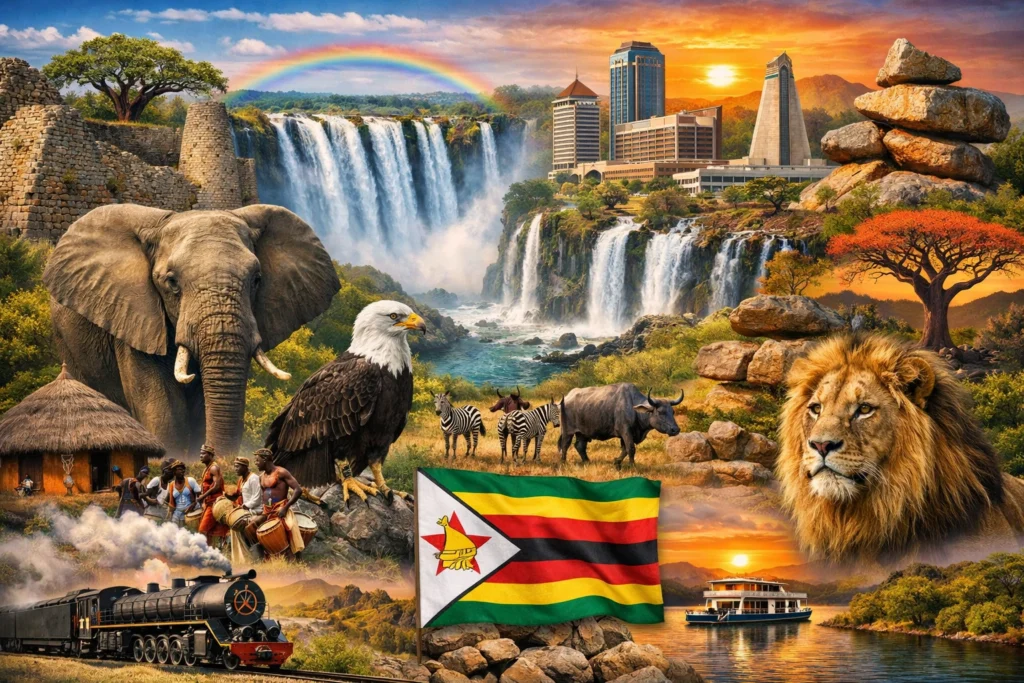
Zimbabwe is one of Africa’s most underrated travel destinations, offering dramatic natural wonders, rich cultural heritage, and unforgettable wildlife experiences. From the thunderous power of Victoria Falls to the quiet mystery of ancient stone cities, Zimbabwe rewards travelers who seek depth, authenticity, and raw beauty. This Zimbabwe travel guide is designed to help you plan a meaningful trip, understand the country beyond headlines, and explore it slowly and responsibly.
Located in southern Africa, Zimbabwe is ideal for travelers who want classic safari experiences, powerful history, and friendly local encounters without overwhelming crowds. Whether you are a solo traveler, a nature lover, or someone searching for soulful journeys, Zimbabwe has something timeless to offer.
Overview of Zimbabwe
Zimbabwe is a landlocked country in southern Africa, bordered by Zambia to the north, Mozambique to the east, South Africa to the south, and Botswana to the west. The country sits on a high plateau, giving it a pleasant climate compared to many equatorial destinations.
For travelers, Zimbabwe is important because it combines world-class wildlife viewing with cultural and historical depth. It is home to one of the Seven Natural Wonders of the World, several UNESCO World Heritage Sites, and some of the most scenic national parks in Africa.
AI Travel Planner
The main gateway city for international travelers is Harare, the capital and largest city. Victoria Falls also acts as a major entry point, especially for tourists focused on nature and adventure.
Major Cities and Regions
Harare
The capital city and main economic hub of Zimbabwe, Harare is known for its leafy suburbs, local markets, art galleries, and museums. It is the primary entry point for international flights.
Victoria Falls
Located in the northwest near the Zambian border, Victoria Falls is Zimbabwe’s most famous tourist town. It serves as a base for visiting the waterfalls and adventure activities.
Bulawayo
Zimbabwe’s second-largest city, Bulawayo is close to important historical sites like the Matobo Hills and Great Zimbabwe. It reflects strong Ndebele cultural influences.
Hwange Region
This region is centered around Hwange National Park, Zimbabwe’s largest wildlife reserve and a key safari destination.
Eastern Highlands
Stretching along the border with Mozambique, this region is known for mountains, forests, waterfalls, and cooler temperatures.
Famous Tourist Places in Zimbabwe
Victoria Falls
Location: Victoria Falls town
Distance from Harare: Approximately 880 km
How to reach: Flights from Harare to Victoria Falls Airport, trains and long-distance buses also operate
Why it is famous: Victoria Falls is one of the largest and most powerful waterfalls in the world. Known locally as “The Smoke That Thunders,” it offers breathtaking views, rainforest walks, and dramatic seasonal variations.
Hwange National Park
Location: Western Zimbabwe
Distance from Harare: Around 700 km
How to reach: Road transfer or flight to nearby airstrips
Why it is famous: Hwange is famous for its massive elephant population and diverse wildlife, including lions, wild dogs, giraffes, and hundreds of bird species.
Great Zimbabwe Ruins
Location: Near Masvingo
Distance from Harare: About 330 km
How to reach: Road travel or train to Masvingo, then local transport
Why it is famous: These stone ruins are the remains of an ancient city built between the 11th and 15th centuries. It is a UNESCO World Heritage Site and a symbol of African civilization and engineering.
Matobo Hills
Location: Near Bulawayo
Distance from Harare: Approximately 440 km
How to reach: Road or rail to Bulawayo, then short drive
Why it is famous: Known for dramatic rock formations, ancient rock art, and spiritual significance. It is also the burial site of Cecil Rhodes and a UNESCO-listed cultural landscape.
Mana Pools National Park
Location: Northern Zimbabwe along the Zambezi River
Distance from Harare: About 370 km
How to reach: Road transfer or charter flight
Why it is famous: Mana Pools is known for walking safaris, river wildlife viewing, and close encounters with elephants and hippos in a pristine environment.
Landscapes and Natural Attractions
Zimbabwe’s landscapes are diverse and constantly changing with the seasons. The country features wide savannas, dense forests, winding rivers, and mountain ranges.
The Zambezi River defines much of the northern landscape, supporting rich ecosystems and dramatic scenery. The Eastern Highlands bring misty mountains, tea plantations, and waterfalls that feel worlds away from the dry plains.
During the rainy season, the countryside turns lush and green, while the dry season offers golden grasslands and excellent wildlife visibility.
Best Things to Do in Zimbabwe
Wildlife safaris in national parks like Hwange and Mana Pools
Exploring Victoria Falls from multiple viewpoints
Learning about ancient African civilizations at Great Zimbabwe
Visiting local markets and art galleries in Harare
Taking guided walking safaris for deeper wildlife understanding
Relaxing on sunset river cruises along the Zambezi
Birdwatching in wetlands and forest reserves
Zimbabwe offers a balanced mix of adventure, education, and quiet reflection.
Adventure and Unique Experiences
White-water rafting on the Zambezi River near Victoria Falls is one of the most thrilling experiences in Africa, best enjoyed during the low-water season.
Bungee jumping and zip-lining over the Batoka Gorge attract adventure lovers.
Walking safaris in Mana Pools and Hwange allow travelers to experience wildlife at ground level, guided by expert rangers.
Hiking in the Eastern Highlands offers cooler weather and scenic trails, suitable for beginners to moderate hikers.
The best season for adventure activities is generally between May and October, when conditions are dry and predictable.
Culture, History, and Heritage
Zimbabwe’s culture is shaped by Shona and Ndebele traditions, expressed through music, dance, sculpture, and storytelling. Stone sculpture is especially significant, with Zimbabwean artists recognized internationally.
Historically, Zimbabwe was home to powerful African kingdoms long before colonial times. The Great Zimbabwe ruins stand as evidence of advanced trade networks and architectural skill.
UNESCO World Heritage Sites in Zimbabwe include Victoria Falls, Great Zimbabwe, and Matobo Hills, each representing a different layer of natural and cultural history.
Traditional ceremonies, local festivals, and everyday village life offer travelers authentic cultural experiences when approached respectfully.
Local Insights for Travelers
Zimbabweans are known for their warmth and politeness. Greetings matter, and taking time to say hello goes a long way.
Local food includes dishes like sadza (a maize-based staple), nyama (meat stews), and leafy vegetables. Trying home-cooked meals or small local restaurants gives a more authentic taste than international chains.
Public transport exists but can be slow. Hiring a driver or joining guided tours is often more practical for travelers.
Cash is important, and travelers should be prepared with small denominations. Mobile payments are common locally, but foreign cards may not always work.
Dress modestly in rural areas and ask permission before photographing people.
Practical Travel Information
Best time to visit
The best time to visit Zimbabwe is during the dry season from May to October. Wildlife viewing is excellent, and Victoria Falls is impressive year-round, though peak water flow occurs from March to May.
Ideal trip duration
A 7 to 10-day trip allows time to explore Victoria Falls, one safari park, and one cultural or historical site.
Budget range
Budget travelers can manage with basic lodges and public transport. Mid-range travelers enjoy comfortable safari lodges and guided tours. Luxury travelers can experience exclusive camps and private safaris.
Safety
Zimbabwe is generally safe for tourists, especially in major destinations. Common travel precautions apply, such as avoiding isolated areas at night and securing valuables.
Connectivity and transport
Mobile networks cover most cities and tourist areas. Wi-Fi is available in hotels and lodges. Domestic flights and private transfers save time over long road journeys.
Sample 7-Day Zimbabwe Itinerary
Day 1: Arrive in Harare, explore markets and local museums
Day 2: Travel to Great Zimbabwe, explore the ruins
Day 3: Visit Matobo Hills and continue to Bulawayo
Day 4: Fly or drive to Hwange National Park, evening safari
Day 5: Full-day safari in Hwange
Day 6: Travel to Victoria Falls, sunset Zambezi cruise
Day 7: Explore Victoria Falls and depart
This itinerary balances history, wildlife, and natural beauty.
Frequently Asked Questions About Zimbabwe
Is Zimbabwe safe for tourists?
Yes, tourist areas are generally safe, and locals are welcoming.
Is Zimbabwe good for solo travelers?
Zimbabwe is suitable for solo travelers, especially with guided tours and lodges.
What currency should I use?
US dollars are widely accepted, and small bills are recommended.
Do I need a visa?
Many nationalities can obtain a visa on arrival, but requirements vary.
Is Zimbabwe budget-friendly?
Yes, especially compared to other safari destinations, though park fees can add up.
Internal Linking Suggestions for TravelBloomy
Link Zimbabwe travel guides to Africa destination hubs
Connect Victoria Falls with nearby Zambia travel content
Link safari-focused articles to Hwange and Mana Pools guides
Connect cultural travel posts with Great Zimbabwe and Matobo Hills
These links help readers explore related destinations and experiences naturally.
Conclusion
Zimbabwe is a destination that rewards curiosity, patience, and open-minded travel. Its landscapes are powerful, its history is profound, and its people leave lasting impressions. By traveling slowly and respectfully, visitors can experience Zimbabwe not just as a destination, but as a story that unfolds with every river, ruin, and conversation. For travelers seeking meaning beyond checklists, Zimbabwe quietly stands among Africa’s most enriching journeys.