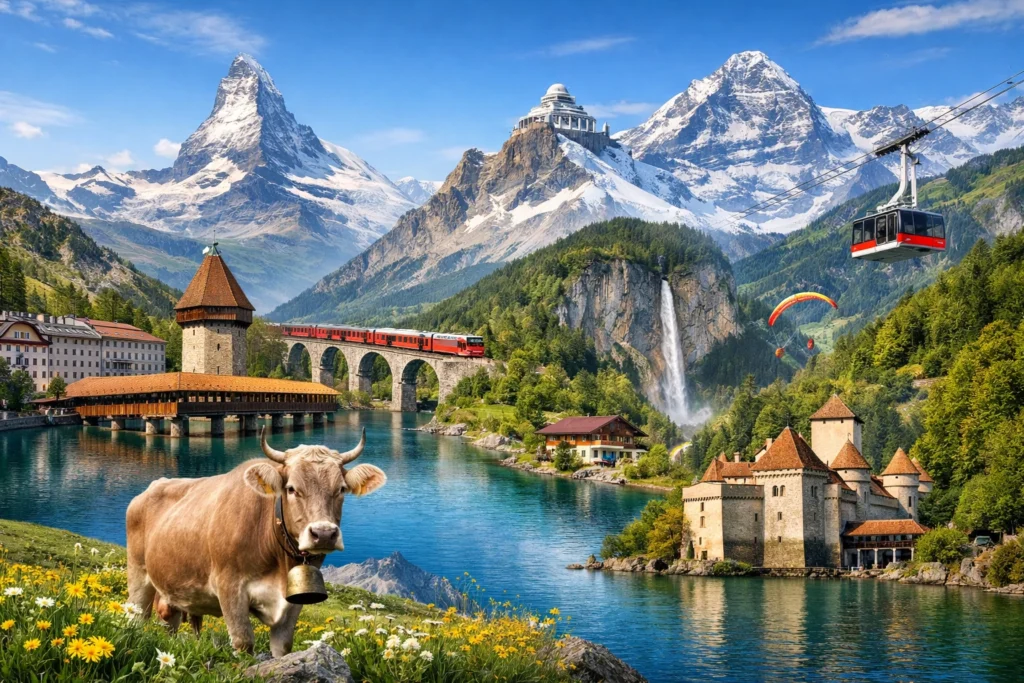
Switzerland is one of those rare destinations that feels almost unreal when you finally experience it. Snow-covered Alps rising above emerald valleys, crystal-clear lakes reflecting medieval towns, scenic train journeys that feel like moving postcards, and a lifestyle built around precision, balance, and deep respect for nature. Traveling to Switzerland is not just about sightseeing; it is about slowing down and absorbing beauty in its purest form. This Switzerland travel guide is designed to help you plan a meaningful, well-paced journey through one of Europe’s most iconic countries.
Located in the heart of Europe, Switzerland consistently ranks among the world’s top travel destinations for its safety, cleanliness, natural landscapes, and cultural depth. Whether you are visiting for alpine adventures, romantic lake towns, cultural cities, or scenic rail journeys, Switzerland offers an experience that stays with you long after the trip ends.
Overview of Switzerland
Switzerland is a landlocked country in Central Europe, bordered by France, Germany, Austria, Italy, and Liechtenstein. Despite its relatively small size, it offers remarkable geographical diversity, ranging from towering alpine peaks to gentle vineyards and lakeside towns.
The country is divided into 26 cantons and is known for its multilingual culture, with German, French, Italian, and Romansh as official languages. This diversity gives each region a distinct personality, making travel within Switzerland feel like exploring multiple countries in one journey.
AI Travel Planner
The main international gateway to Switzerland is Zurich, the country’s largest city and busiest airport. Geneva is another major entry point, especially for travelers coming from Western Europe or international organizations.
Major Cities and Regions in Switzerland
Zurich
Zurich is Switzerland’s financial capital and cultural hub. It blends modern city life with a charming old town, scenic river views, and easy access to nature.
Geneva
Geneva sits on the shores of Lake Geneva and is known for its international character, luxury shopping, and proximity to the French Alps.
Lucerne
Lucerne is a postcard-perfect city with a medieval old town, wooden bridges, and stunning lake and mountain scenery.
Interlaken
Interlaken is the adventure capital of Switzerland, located between Lake Thun and Lake Brienz, with direct access to the Jungfrau region.
Zermatt
Zermatt is a car-free alpine village famous for the Matterhorn and world-class skiing and hiking.
Bern
Bern, the capital city, features a UNESCO-listed old town with sandstone architecture and a relaxed, local atmosphere.
Famous Tourist Places in Switzerland
Matterhorn
Location: Zermatt
Distance from Zurich: Approximately 235 km
How to reach: Train from Zurich to Zermatt via Visp
Why visit: The Matterhorn is Switzerland’s most iconic mountain and one of the most photographed peaks in the world. Zermatt offers breathtaking viewpoints, glacier experiences, and year-round snow activities.
Jungfraujoch – Top of Europe
Location: Jungfrau Region
Distance from Zurich: Approximately 135 km
How to reach: Train via Interlaken and Kleine Scheidegg
Why visit: Known as the highest railway station in Europe, Jungfraujoch offers panoramic views of the Aletsch Glacier, snow experiences even in summer, and unforgettable alpine scenery.
Lake Lucerne
Location: Central Switzerland
Distance from Zurich: Approximately 52 km
How to reach: Direct train from Zurich
Why visit: Surrounded by mountains, Lake Lucerne is ideal for boat cruises, lakeside walks, and accessing Mount Pilatus and Mount Rigi.
Château de Chillon
Location: Near Montreux
Distance from Geneva: Approximately 90 km
How to reach: Train from Geneva to Montreux
Why visit: This medieval castle on Lake Geneva is one of Switzerland’s most visited historical sites and offers insights into the country’s medieval past.
Bern Old Town
Location: Bern
Distance from Zurich: Approximately 120 km
How to reach: Direct train from Zurich
Why visit: A UNESCO World Heritage Site, Bern’s old town features arcaded streets, clock towers, and scenic river views.
Landscapes and Natural Attractions
Switzerland is defined by its landscapes. The Alps dominate much of the country, offering dramatic mountain scenery, glaciers, alpine meadows, and pristine lakes. The Swiss Plateau, where cities like Zurich and Bern are located, offers rolling hills and farmland. In the south, the Ticino region features a Mediterranean feel with palm trees and lakes.
Seasonal changes dramatically alter the scenery. Summer brings green valleys and hiking trails, autumn offers golden vineyards and clear skies, winter transforms the Alps into a snow-covered wonderland, and spring fills the countryside with wildflowers.
Best Things to Do in Switzerland
Scenic train journeys on routes like the Glacier Express and Bernina Express
Exploring medieval old towns in Lucerne, Bern, and Zurich
Boat cruises on Lake Geneva, Lake Lucerne, and Lake Zurich
Cable car rides to mountain viewpoints like Mount Pilatus and Gornergrat
Visiting chocolate factories and cheese dairies
Relaxing in alpine villages and spa towns
Adventure and Experiences
Switzerland is a paradise for adventure lovers of all levels.
Trekking and hiking are best from June to September, with trails suitable for beginners and experienced hikers.
Skiing and snowboarding are world-class from December to March in resorts like Zermatt, St. Moritz, and Verbier.
Paragliding is popular in Interlaken and Lauterbrunnen, offering stunning aerial views of valleys and lakes.
Glacier walks and snow activities are available year-round in high-altitude regions like Jungfraujoch.
Cycling routes pass through scenic countryside and along lakes during warmer months.
Culture, History, and Heritage
Switzerland’s culture is shaped by its regional diversity and long history of neutrality. Each region has its own traditions, festivals, cuisine, and architecture. The country values punctuality, cleanliness, and respect for privacy.
Switzerland is home to several UNESCO World Heritage Sites, including Bern Old Town, the Swiss Alps Jungfrau-Aletsch region, and Lavaux Vineyard Terraces. Folk music, alpine horns, traditional costumes, and seasonal festivals still play an important role in local life.
Local Insights for Travelers
Swiss people value order and quiet public behavior. Being punctual is considered respectful.
Public transport is extremely reliable and often better than renting a car.
Tap water is safe and of excellent quality across the country.
Local dishes to try include fondue, raclette, rösti, and regional cheeses.
Shops often close early, especially on Sundays, so plan accordingly.
Exploring smaller villages often offers more authentic experiences than crowded tourist hubs.
Practical Travel Information
Best time to visit
June to September for sightseeing and hiking
December to March for winter sports
Ideal trip duration
7 to 10 days for a balanced experience
Budget range
Budget travelers: CHF 120–150 per day
Mid-range travelers: CHF 200–300 per day
Luxury travelers: CHF 400+ per day
Safety
Switzerland is one of the safest countries in the world, with very low crime rates.
Connectivity and transport
Excellent train, bus, and boat networks connect even remote areas. Swiss Travel Pass offers great value for tourists.
Sample 5-Day Switzerland Itinerary
Day 1: Zurich
Explore Old Town, Lake Zurich, and local museums
Day 2: Lucerne
Visit Chapel Bridge, Lake Lucerne cruise, Mount Pilatus
Day 3: Interlaken and Jungfrau Region
Travel to Interlaken, visit Lauterbrunnen or Jungfraujoch
Day 4: Zermatt
Matterhorn views, Gornergrat railway, alpine walks
Day 5: Geneva
Lake Geneva, old town, Montreux day trip
Frequently Asked Questions
Is Switzerland safe for tourists?
Yes, Switzerland is extremely safe for solo travelers, families, and first-time visitors.
Is Switzerland expensive?
Yes, but smart planning, travel passes, and local food options can help manage costs.
What is the best month to visit Switzerland?
June and September offer pleasant weather and fewer crowds.
Is Switzerland good for solo travel?
Absolutely. It is safe, well-organized, and easy to navigate alone.
Do I need a visa to visit Switzerland?
Switzerland is part of the Schengen Area. Visa requirements depend on nationality.
Can I travel Switzerland without a car?
Yes. Public transport is efficient and covers almost every tourist destination.
Internal Linking Suggestions for TravelBloomy
Link Switzerland travel guide to Zurich travel guide
Link Switzerland travel guide to Interlaken and Jungfrau region guides
Link Switzerland travel guide to France and Italy travel guides
Link Switzerland travel guide to Austria scenic train routes
Conclusion
Switzerland is more than a destination; it is a feeling of balance, beauty, and quiet wonder. Every train ride, mountain view, and lakeside walk encourages travelers to slow down and truly observe the world around them. Whether you are drawn by alpine adventures, cultural cities, or peaceful landscapes, Switzerland rewards those who travel mindfully. Take your time, explore beyond the obvious, and let Switzerland reveal its timeless charm, one breathtaking moment at a time.