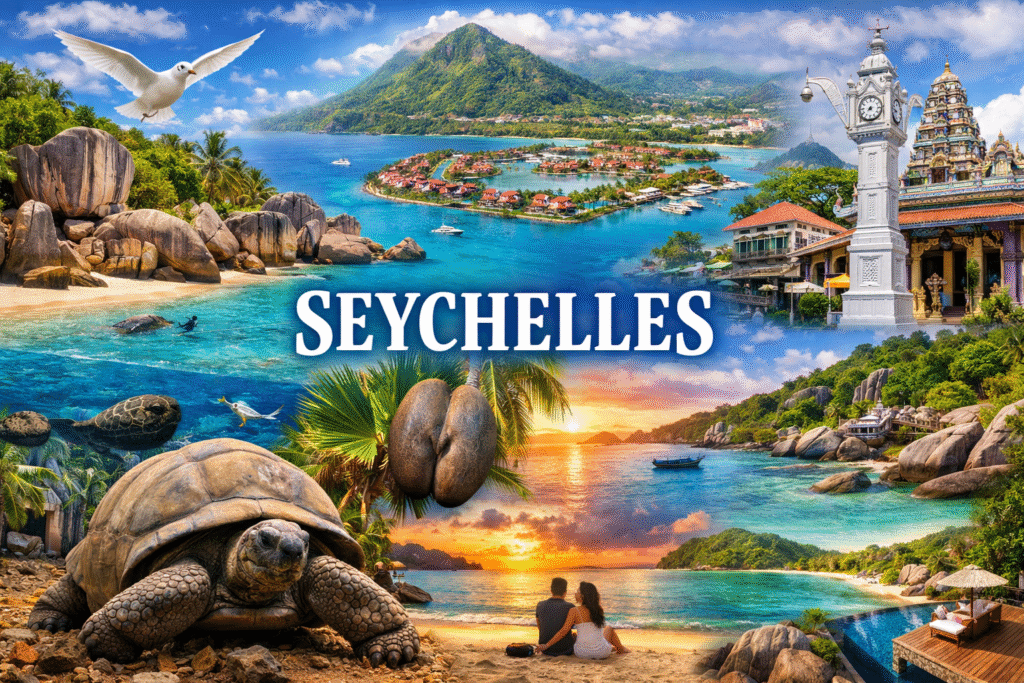
Seychelles is one of those rare destinations that feels unreal even after you arrive. Scattered across the Indian Ocean, this island nation blends powder-soft white beaches, turquoise waters, granite rock formations, and lush tropical forests into a setting that feels both untouched and deeply calming. For travelers seeking a balance of luxury, nature, culture, and slow island life, Seychelles delivers an experience that stays with you long after the journey ends.
Often searched as a dream honeymoon destination, Seychelles is much more than that. It’s a place for solo travelers, nature lovers, photographers, and anyone who values unhurried travel and natural beauty. In this guide, you’ll find everything you need to plan a real, practical trip to Seychelles, written in TravelBloomy’s slow-travel style.
Overview of Seychelles
Seychelles is an archipelago of 115 islands located in the Indian Ocean, off the eastern coast of Africa. It sits northeast of Madagascar and around 1,600 kilometers east of mainland Africa. Despite its remote location, Seychelles is surprisingly accessible and well-organized for travelers.
The country’s main gateway is Mahé Island, home to the capital city Victoria and Seychelles International Airport. Most international travelers enter through Mahé before exploring nearby islands such as Praslin and La Digue.
AI Travel Planner
What makes Seychelles important for travelers is its rare combination of unspoiled beaches, protected marine parks, biodiversity, and a multicultural Creole heritage influenced by Africa, Europe, and Asia. Unlike many beach destinations, Seychelles focuses heavily on conservation, making it ideal for eco-conscious travelers.
Major Islands and Regions
Mahé Island
Mahé is the largest island and the heart of Seychelles. It hosts the capital city, most resorts, markets, hiking trails, and cultural landmarks. It’s also the best base for first-time visitors.
Praslin Island
Praslin is famous for its beaches and the Vallée de Mai Nature Reserve, home to the iconic coco de mer palm. It offers a quieter, more relaxed atmosphere compared to Mahé.
La Digue Island
La Digue is small, charming, and incredibly photogenic. Life here moves slowly, bicycles are the main transport, and beaches like Anse Source d’Argent are world-famous.
Outer Islands
The outer islands such as Aldabra, Desroches, and Farquhar are remote and largely untouched. These are mostly visited by luxury travelers, researchers, or those seeking extreme seclusion.
Famous Tourist Places in Seychelles
Anse Source d’Argent
Location: La Digue Island
Distance from Mahé: Around 60 km (via ferry and island transfer)
How to reach: Ferry from Mahé to La Digue via Praslin, then bicycle or walk
Why it’s famous: Often listed among the most beautiful beaches in the world, Anse Source d’Argent is known for its shallow turquoise waters, soft sand, and dramatic granite boulders. It’s perfect for photography, swimming, and relaxed beach walks.
Vallée de Mai Nature Reserve
Location: Praslin Island
Distance from Mahé: Around 45 km
How to reach: Flight or ferry from Mahé to Praslin, then taxi
Why it’s famous: A UNESCO World Heritage Site, Vallée de Mai is home to the rare coco de mer palm and feels like a prehistoric forest. Walking through it is one of the most unique nature experiences in Seychelles.
Anse Lazio
Location: Praslin Island
Distance from Mahé: Around 50 km
How to reach: Ferry or flight to Praslin, then taxi
Why it’s famous: Anse Lazio is celebrated for its crystal-clear waters, gentle waves, and perfect swimming conditions. It’s ideal for snorkeling and sunset views.
Morne Seychellois National Park
Location: Mahé Island
Distance from Victoria: 10–15 km
How to reach: Taxi or local bus from Victoria
Why it’s famous: Covering more than 20 percent of Mahé, this national park offers hiking trails, panoramic viewpoints, waterfalls, and rich biodiversity.
Beau Vallon Beach
Location: Mahé Island
Distance from Victoria: 3 km
How to reach: Taxi or bus
Why it’s famous: Beau Vallon is the most lively beach in Seychelles, offering water sports, restaurants, sunsets, and local street food stalls.
Landscapes and Natural Attractions
Seychelles is a visual masterpiece. The islands feature granite mountains rising directly from the sea, dense tropical forests, coral reefs, and powdery beaches. Inland areas offer hiking trails, tea plantations, and viewpoints, while the coastlines reveal lagoons and marine life.
Seasonal changes affect sea conditions more than temperature. From May to October, the southeast trade winds bring cooler, drier weather ideal for hiking. From November to April, calmer seas make snorkeling and diving excellent.
Marine parks protect coral reefs, sea turtles, reef fish, and even whale sharks during certain months.
Best Things to Do in Seychelles
Island hopping between Mahé, Praslin, and La Digue
Snorkeling in marine parks and shallow lagoons
Hiking trails in Morne Seychellois National Park
Relaxing on secluded beaches away from crowds
Exploring local markets and Creole cuisine
Sunset watching at Beau Vallon or Anse Intendance
Visiting botanical gardens and spice plantations
Seychelles is less about rushing through attractions and more about enjoying each moment slowly.
Adventure and Unique Experiences
Snorkeling and Scuba Diving
Best season: Year-round, best visibility from April–May and October–November
Experience level: Beginner-friendly to advanced
Coral reefs and marine biodiversity make Seychelles a top diving destination.
Hiking and Nature Walks
Best season: May to September
Experience level: Moderate
Trails like Copolia and Morne Blanc offer scenic views and forest immersion.
Kayaking and Paddleboarding
Best season: Calm months between November and April
Experience level: Beginner
Lagoon kayaking offers peaceful exploration of coastlines.
Deep-Sea Fishing
Best season: October to April
Experience level: Intermediate
Seychelles is known for tuna, marlin, and sailfish.
Culture, History, and Heritage
Seychelles has a rich Creole culture shaped by African, French, British, Indian, and Chinese influences. Creole is the most widely spoken language, alongside English and French.
Music, dance, and storytelling play an important role in local life. Traditional moutya and sega dances reflect African roots, while architecture shows colonial influences.
Historical landmarks include Victoria Clocktower, colonial buildings, and old plantations. Vallée de Mai and Aldabra Atoll are UNESCO World Heritage Sites, highlighting the nation’s ecological importance.
Local Insights You Won’t Find Everywhere
Most locals swim early morning or late afternoon to avoid strong sun
Sundays are quiet; plan tours accordingly
Local takeaways offer authentic Creole meals at lower prices
Public buses are affordable but slow; taxis are expensive
Respect nature rules strictly; conservation is taken seriously
Dress modestly in towns and villages, beachwear is fine only on beaches
Fresh fish curry, grilled octopus, and ladob are must-try dishes
Practical Travel Information
Best time to visit
April–May and October–November offer the best balance of weather and sea conditions.
Ideal trip duration
7–10 days is perfect for exploring Mahé, Praslin, and La Digue comfortably.
Budget range
Budget travelers: ₹12,000–18,000 per day
Mid-range travelers: ₹20,000–35,000 per day
Luxury travelers: ₹50,000+ per day
Safety tips
Seychelles is very safe for tourists. Follow basic beach safety rules and avoid swimming in rough seas.
Connectivity and transport
SIM cards are easily available at the airport. Ferries connect main islands, while buses and taxis operate on Mahé and Praslin.
Sample 7-Day Seychelles Itinerary
Day 1: Arrive in Mahé, explore Victoria and Beau Vallon
Day 2: Hike Morne Blanc and relax at Anse Intendance
Day 3: Ferry to Praslin, visit Anse Lazio
Day 4: Explore Vallée de Mai and nearby beaches
Day 5: Ferry to La Digue, cycle around the island
Day 6: Anse Source d’Argent and snorkeling
Day 7: Return to Mahé and departure
Frequently Asked Questions
Is Seychelles safe for solo travelers?
Yes, it’s one of the safest island destinations with friendly locals.
Is Seychelles expensive?
It can be, but budget guesthouses and local food help reduce costs.
Do Indians need a visa for Seychelles?
No visa is required, but travel authorization is needed before arrival.
Is Seychelles good for non-swimmers?
Yes, many beaches have shallow lagoons suitable for relaxation.
Can I use Indian currency?
No, Seychelles Rupee is used. Cards are widely accepted.
Is Seychelles family-friendly?
Yes, calm beaches and nature experiences suit families well.
Internal Linking Suggestions for TravelBloomy
Link Seychelles with other island destinations like Maldives and Mauritius
Connect Seychelles beach guides with Africa travel content
Link Mahé Island guides to Praslin and La Digue articles
Cross-link Seychelles adventure travel with scuba diving destinations in India
Conclusion
Seychelles isn’t just a destination you visit; it’s a place you slow down in. From quiet island mornings to warm sunsets over turquoise waters, it invites travelers to reconnect with nature and themselves. Whether you’re planning a honeymoon, a solo escape, or a nature-focused holiday, Seychelles offers a rare sense of peace and authenticity. Travel slowly here, respect the islands, and let the rhythm of Seychelles guide your journey.