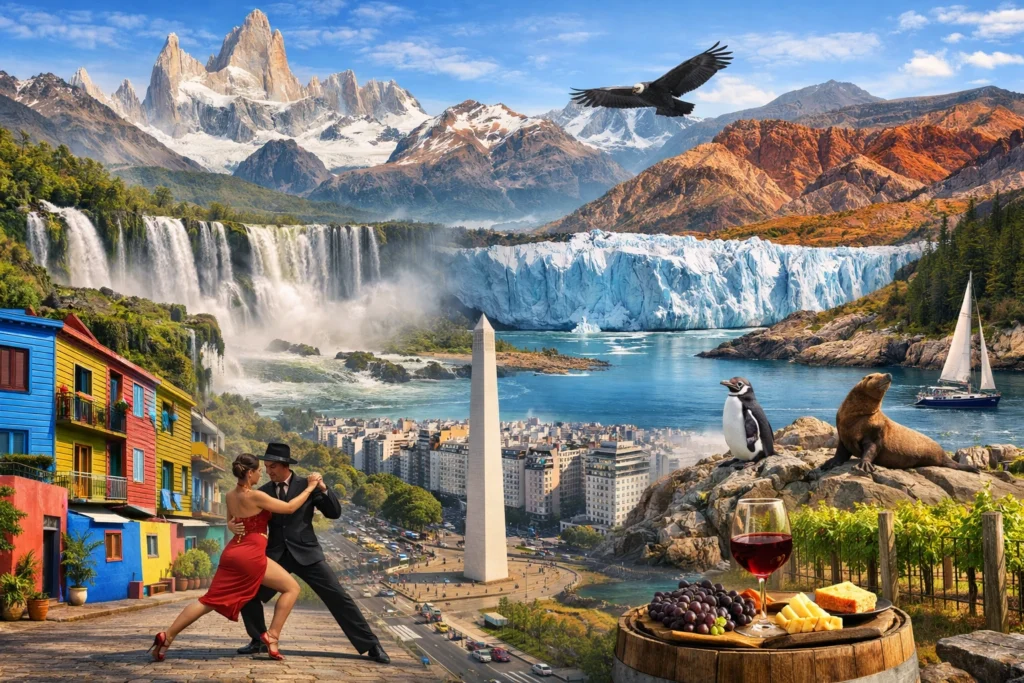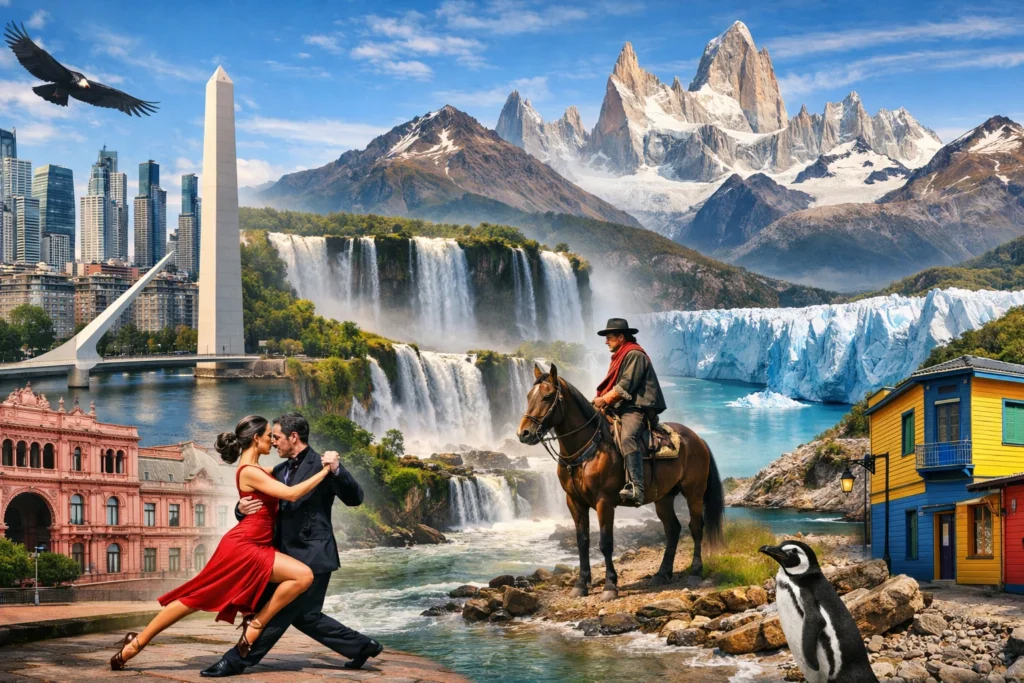
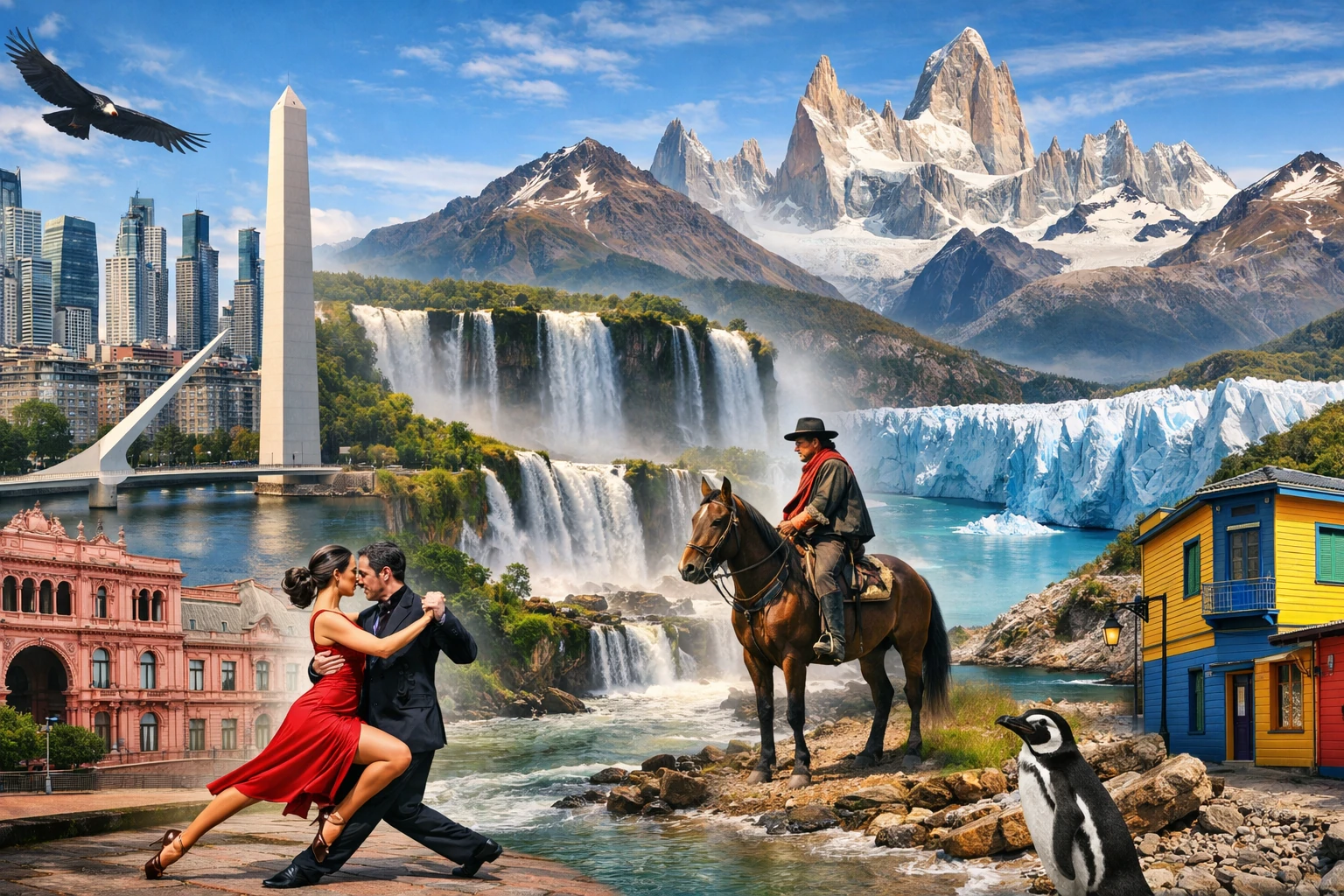
Argentina is a country that feels larger than life. From the glaciers of Patagonia to the rhythm of tango in Buenos Aires, this Argentina travel guide is designed to help you plan with clarity, structure, and confidence. Instead of overwhelming you with scattered ideas, this guide organizes everything you need — from trip cost and itinerary planning to cultural insights and practical logistics.
Whether you’re planning a slow scenic journey or a premium luxury escape, Argentina rewards thoughtful travelers. Its geography stretches from subtropical waterfalls in the north to icy landscapes in the south, offering remarkable diversity in one single country. This page will help you decide how to structure your journey, what it will realistically cost, and how to experience Argentina beyond surface-level tourism.
Meta Description: Plan your perfect Argentina trip with costs, itinerary, cities, visa, budget breakdown, and practical travel insights in this detailed Argentina travel guide.
Overview of Argentina
Argentina is located in southern South America and shares borders with Chile, Bolivia, Paraguay, Brazil, and Uruguay. The capital city is Buenos Aires, often described as the most European city in Latin America. The country’s main international gateway is Ministro Pistarini International Airport, commonly known as Ezeiza International Airport.
AI Travel Planner
Argentina is the eighth-largest country in the world, stretching from subtropical Iguazu Falls in the north to the windswept plains and glaciers of Patagonia in the south. This vast geography makes travel planning crucial, as distances between major attractions can be significant.
For international travelers, Argentina is positioned as a destination for dramatic landscapes, wine regions, wildlife, and cultural depth. It appeals strongly to those who prefer meaningful experiences over rushed sightseeing.
Why Visit Argentina
Argentina stands out because of its emotional intensity. Few countries combine cosmopolitan culture, wilderness, and food traditions in such a powerful way. In one trip, you can experience European-style architecture, walk on ancient glaciers, taste world-class Malbec wine, and watch authentic tango performances.
Compared to popular destinations in Europe or Southeast Asia, Argentina feels more expansive and less crowded. It is ideal for travelers who enjoy open spaces, long scenic drives, and immersive experiences rather than tightly packed city-hopping itineraries.
Argentina is particularly suited for couples, nature lovers, photographers, wine enthusiasts, and travelers who value dramatic geography. It may not be ideal for ultra-short trips because travel distances require thoughtful pacing.
Major Cities and Regions
Buenos Aires
Buenos Aires is the cultural and political heart of Argentina. Known for its neighborhoods like Palermo and San Telmo, it offers historic architecture, nightlife, museums, and tango shows. A minimum of 3 days is recommended to explore at a comfortable pace.
This city is perfect for urban explorers, food lovers, and first-time visitors. It works well as a starting point in any Argentina itinerary 7 days plan. Internally, you can connect this section to a detailed Buenos Aires travel guide page.
Patagonia
Patagonia covers southern Argentina and is defined by glaciers, mountains, and remote landscapes. Popular bases include El Calafate and Ushuaia. A minimum of 4–5 days is ideal.
Patagonia is suited for slow travelers, adventure seekers, and photographers. It leans toward mid-range to luxury budgets due to transport and accommodation costs.
Mendoza
Mendoza lies at the foothills of the Andes and is Argentina’s wine capital. It is best known for Malbec vineyards and mountain views. Two to three days are sufficient.
This region suits couples and relaxed travelers who want scenic cycling tours, wine tastings, and culinary experiences.
Iguazu Region
The northern region near Puerto Iguazú provides access to Iguazú Falls. A 2-day stay is ideal.
It is perfect for nature lovers and families, offering well-developed visitor infrastructure.
Famous Tourist Places in Argentina
Iguazú Falls
Located near Puerto Iguazú, approximately 1,300 km from Buenos Aires, Iguazú Falls can be reached via a 2-hour domestic flight. It is one of the world’s largest waterfall systems, straddling Argentina and Brazil.
Entry fee is approximately $25–30 for international visitors. Plan to arrive early to avoid peak heat and crowds. The Argentine side offers longer walking trails.
Perito Moreno Glacier
Situated in Los Glaciares National Park near El Calafate, this glacier lies around 2,700 km south of Buenos Aires. It requires a domestic flight to El Calafate followed by a 1.5-hour drive.
Entry to the national park costs about $30–35. The glacier is famous for its advancing ice wall and dramatic ice breaks. Allocate half a day for boardwalk views.
Tierra del Fuego National Park
Located near Ushuaia, around 3,000 km from Buenos Aires, it can be reached by flight to Ushuaia and then a short drive.
Entry fees are approximately $20. It is known as the southernmost national park in the world and offers hiking trails with mountain and sea views.
Landscapes and Natural Diversity
Argentina’s landscapes shift dramatically from north to south. The Iguazu region is lush and tropical, while Patagonia offers glaciers, steppe plains, and jagged mountain peaks.
The Andes Mountains run along the western border, creating dramatic scenery and wine-friendly climates in Mendoza. In contrast, the Pampas region is flat and agricultural.
Seasons are reversed compared to the Northern Hemisphere. Summer (December to February) is ideal for Patagonia, while spring and autumn offer milder conditions across most regions.
Best Things to Do in Argentina
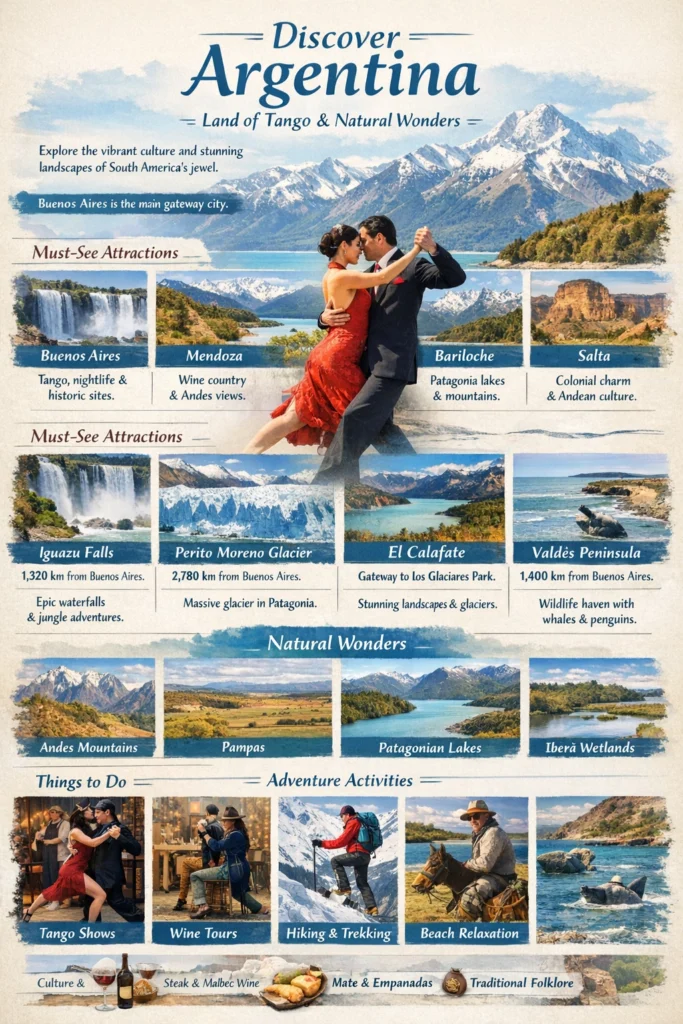
Exploring Buenos Aires on foot reveals street art, colonial buildings, and lively plazas. Watching a live tango performance adds cultural context beyond tourist clichés.
Wine tasting in Mendoza offers a relaxed pace and scenic vineyard backdrops. Guided glacier walks in Patagonia provide unforgettable close-up experiences.
Families enjoy boat rides near Iguazu Falls, while couples often choose sunset river cruises in Buenos Aires for romantic moments.
Adventure and Activities
Glacier trekking is best between October and April, moderate difficulty, costing around $150–250. Suitable for active adults.
Hiking in Patagonia is ideal during summer months. Difficulty varies from easy trails to challenging multi-day treks. Budget $0–50 depending on park entry and guides.
Wildlife viewing in Peninsula Valdés is seasonal, with whale watching from June to December costing around $80–120.
Culture, History and Heritage
Argentina’s history includes indigenous civilizations, Spanish colonization in the 16th century, and independence in 1816. European immigration in the 19th and 20th centuries shaped its architecture and food culture.
Córdoba preserves colonial heritage, while Buenos Aires reflects French and Italian influences. Argentina also hosts UNESCO sites like Jesuit Block and Estancias of Córdoba.
Cultural etiquette values politeness, punctuality in formal settings, and social warmth in casual interactions.
Local Insights
Try dishes like empanadas, asado (barbecue), and dulce de leche desserts. Local wine is affordable compared to global standards.
Avoid underestimating travel distances between regions. Domestic flights save significant time.
Use official taxis or ride-hailing apps in Buenos Aires for safety and fair pricing. Carry small change for public transport.
Practical Travel Information
The best time to visit Argentina depends on your route. December to March is best for Patagonia, while April and October offer balanced weather countrywide.
A 7–10 day trip is ideal for first-time visitors covering Buenos Aires and one major region.
Most travelers require a visa or e-visa depending on nationality. Always verify official immigration sources before booking.
Daily Budget Estimates:
Budget traveler – $50–80 per day
Mid-range traveler – $100–180 per day
Luxury traveler – $250+ per day
Budget includes hostel stays and local transport. Mid-range includes 3-star hotels and guided tours. Luxury includes boutique hotels and premium excursions.
Estimated 7-Day Trip Cost
Flights: $900–1400
Accommodation: $350 (budget) / $800 (mid-range) / $2000+ (luxury)
Food: $150–400
Local transport: $100–300
Activities: $200–500
Insurance: $40–70
Total Estimate:
Budget: $1800–2200
Mid-range: $2500–3500
Luxury: $4500+
Compared to a domestic scenic trip in many countries, Argentina may be higher due to long-haul flights and internal distances.
Sample 7-Day Itinerary
Day 1–2: Explore Buenos Aires neighborhoods, tango show, and city tours.
Day 3–4: Fly to Iguazu Falls, explore both upper and lower circuits.
Day 5–6: Fly to El Calafate, visit Perito Moreno Glacier.
Day 7: Return to Buenos Aires and depart.
This sequence balances culture and nature without rushing excessively.
Packing Checklist
Pack layers for Patagonia, lightweight clothing for northern regions, comfortable walking shoes, sunscreen, and a universal power adapter. Weather can change quickly in southern Argentina, so windproof jackets are essential.
FAQs
Is Argentina safe?
Major tourist areas are generally safe, but use normal precautions in big cities.
Best month to visit?
October and November offer balanced weather with fewer crowds.
Is Argentina expensive?
It ranges from affordable mid-range options to premium experiences in Patagonia.
How many days required?
7–10 days minimum for a balanced experience.
Is it good for honeymoon?
Yes, especially Mendoza and Patagonia for scenic romance.
Continue Exploring with TravelBloomy
Patagonia travel guide
Buenos Aires travel guide
South America country comparison guide
Budget vs luxury travel comparison
Honeymoon travel planning guide
TravelBloomy Smart Tools
Use TravelBloomy’s AI Itinerary Generator to structure region combinations logically. The Budget Calculator helps estimate Argentina trip cost before booking. Saving your trip plan allows comparison between budget and luxury travel styles.
Conclusion
Argentina is not a destination to rush. It rewards travelers who slow down, respect distances, and plan strategically. From glacier landscapes to vibrant tango halls, it offers depth that few countries match.
If you approach it with clarity and structured planning, Argentina becomes more than a vacation. It becomes a journey across climates, cultures, and contrasts — carefully layered and unforgettable.