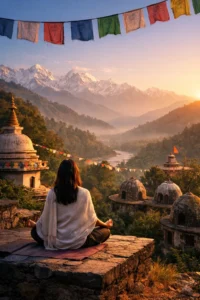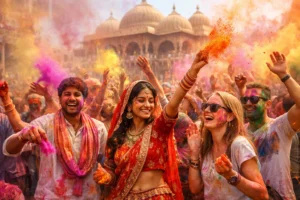
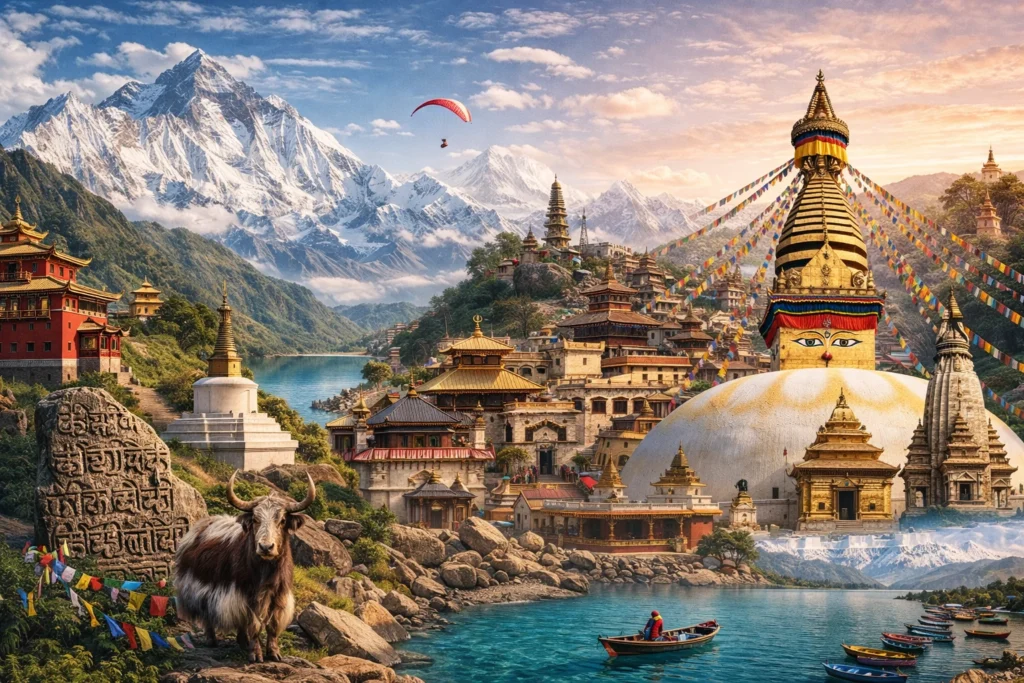
Nepal is a destination that quietly changes people. Tucked between India and Tibet, this Himalayan country is known worldwide for Mount Everest, but Nepal is far more than just tall peaks. It is a land of ancient temples, peaceful monasteries, vibrant street life, deep-rooted traditions, and warm-hearted people. Whether you come seeking adventure, spiritual depth, cultural richness, or slow travel in nature, Nepal offers experiences that feel raw, real, and deeply personal.
This Nepal travel guide is written to help you plan a practical trip while understanding why Nepal continues to inspire travelers long after they return home.
Overview of Nepal
Nepal is a landlocked country in South Asia, bordered by India to the south, east, and west, and China (Tibet region) to the north. Despite its relatively small size, Nepal has remarkable geographical diversity, ranging from subtropical plains in the Terai region to the world’s highest mountain range, the Himalayas.
Nepal holds immense importance for travelers due to its trekking routes, spiritual heritage, and preserved traditions. Kathmandu, the capital city, is the main gateway for international travelers and the cultural heart of the country.
AI Travel Planner
Major Cities and Regions in Nepal
Kathmandu Valley
The cultural and historical core of Nepal, home to Kathmandu, Bhaktapur, and Patan. Known for temples, palaces, and UNESCO World Heritage Sites.
Pokhara
Nepal’s adventure and relaxation hub, famous for lakes, mountain views, paragliding, and access to Annapurna trekking routes.
Chitwan
Located in the Terai region, Chitwan is known for its national park, wildlife safaris, and jungle experiences.
Lumbini
The birthplace of Lord Buddha, Lumbini is a major pilgrimage site and a peaceful spiritual destination.
Everest Region (Khumbu)
Home to Mount Everest and legendary trekking routes, this region attracts trekkers and mountaineers from around the world.
Famous Tourist Places in Nepal
Pashupatinath Temple
City: Kathmandu
Distance from Kathmandu city center: Around 5 km
How to reach: Taxi or local transport
Why visit: One of the most sacred Hindu temples, located on the banks of the Bagmati River, offering deep spiritual insight into Nepalese culture.
Swayambhunath (Monkey Temple)
City: Kathmandu
Distance from Kathmandu city center: Around 3 km
How to reach: Taxi or by climbing stone steps
Why visit: An ancient Buddhist stupa offering panoramic views of Kathmandu Valley and a blend of Hindu and Buddhist symbolism.
Pokhara Lakeside and Phewa Lake
City: Pokhara
Distance from Kathmandu: Around 200 km
How to reach: Flight, tourist bus, or road
Why visit: Peaceful lakeside walks, boating with mountain reflections, and a relaxed traveler-friendly atmosphere.
Bhaktapur Durbar Square
City: Bhaktapur
Distance from Kathmandu: Around 13 km
How to reach: Local bus or taxi
Why visit: A beautifully preserved medieval city showcasing Newari architecture, temples, and traditional life.
Lumbini
City: Lumbini
Distance from Kathmandu: Around 260 km
How to reach: Flight to Bhairahawa or road
Why visit: The birthplace of Lord Buddha, featuring monasteries built by different countries and a calm spiritual environment.
Landscapes and Natural Attractions
Nepal’s landscapes are dramatic and unforgettable. The Himalayan range dominates the north, offering snow-covered peaks, glaciers, and high-altitude valleys. Central Nepal features lush hills, rivers, and terraced farmland, while southern Nepal transitions into tropical jungles and grasslands.
Seasonal changes transform Nepal’s beauty. Spring brings blooming rhododendrons, autumn offers crystal-clear mountain views, and winter showcases snow-covered trails at higher altitudes. Monsoon season turns hills green and rivers powerful.
Best Things to Do in Nepal
Explore ancient temples, stupas, and palace squares in Kathmandu Valley.
Trek through Himalayan trails like Annapurna Base Camp or Everest Base Camp.
Relax in Pokhara with mountain views, lakeside cafes, and yoga retreats.
Experience wildlife safaris in Chitwan National Park.
Participate in meditation, yoga, or spiritual retreats in monasteries and ashrams.
Adventure and Experiences
Trekking and Hiking
Nepal is one of the world’s top trekking destinations. Annapurna, Everest, and Langtang regions offer routes for beginners to experienced trekkers. Best seasons are March to May and September to November.
Paragliding
Pokhara is one of the best paragliding spots in the world, offering flights over lakes with Himalayan views. Suitable for beginners with tandem flights.
River Rafting
Trishuli and Bhote Koshi rivers provide rafting experiences ranging from gentle to adrenaline-filled. Best during post-monsoon and spring seasons.
Mountain Biking
Hilly terrains around Kathmandu and Pokhara offer thrilling trails for intermediate riders.
Wildlife Safari
Jeep safaris and canoe rides in Chitwan and Bardia National Parks offer chances to see rhinos, deer, crocodiles, and birdlife.
Culture, History, and Heritage
Nepal’s culture is deeply influenced by Hinduism and Buddhism, often blended seamlessly in daily life. Temples and monasteries exist side by side, and festivals are celebrated with devotion and color.
The country has several UNESCO World Heritage Sites, including Kathmandu Durbar Square, Patan Durbar Square, Bhaktapur Durbar Square, Swayambhunath, Boudhanath, Lumbini, and Chitwan National Park.
Traditional music, masked dances, wood carvings, and metalwork reflect centuries-old craftsmanship. The Newari culture of Kathmandu Valley is particularly rich in art and architecture.
Local Insights for Travelers
Early mornings are best for mountain views due to clear skies.
Respect religious customs by dressing modestly and walking clockwise around stupas.
Try local dishes like dal bhat, momo, thukpa, and Newari cuisine.
Tipping is appreciated but not mandatory.
Slow travel is deeply rewarding in Nepal, especially in villages and trekking regions.
Practical Travel Information
Best time to visit
The best seasons are spring (March to May) and autumn (September to November). Winter is suitable for lower regions, while monsoon season brings fewer crowds and lush scenery.
Ideal trip duration
10 to 14 days is ideal for combining culture, trekking, and relaxation.
Budget range
Budget travelers: Guesthouses, local buses, and street food
Mid-range travelers: Comfortable hotels, tourist buses, guided treks
Luxury travelers: Boutique hotels, helicopter tours, premium trekking lodges
Safety tips
Nepal is generally safe for travelers. Be cautious on mountain trails, follow local advice, and use licensed guides for high-altitude treks.
Connectivity and transport
Internet access is good in cities and tourist areas. Domestic flights, buses, and jeeps connect major destinations.
Sample 5-Day Nepal Itinerary
Day 1: Arrive in Kathmandu, explore Durbar Square and local markets
Day 2: Visit Swayambhunath, Boudhanath, and Pashupatinath
Day 3: Travel to Pokhara, enjoy lakeside and sunset views
Day 4: Sunrise at Sarangkot, adventure activities, relaxation
Day 5: Return to Kathmandu or extend trip to Chitwan or trekking regions
Frequently Asked Questions
Is Nepal safe for tourists?
Yes, Nepal is considered safe, especially in tourist areas and trekking regions.
Is Nepal good for solo travelers?
Yes, Nepal is popular among solo travelers and backpackers.
What is the best month to visit Nepal?
October and November are considered the best for clear skies and trekking.
Is Nepal budget-friendly?
Very much. Nepal offers great value for budget and mid-range travelers.
Do I need a visa for Nepal?
Most nationalities can get a visa on arrival. Check current requirements before travel.
Internal Linking Suggestions for TravelBloomy
Link Nepal travel guides to Kathmandu city travel guide
Connect Pokhara articles with adventure travel content
Link Himalayan trekking guides with India and Bhutan travel posts
Connect Nepal spiritual travel with destinations like Varanasi and Bodh Gaya
Conclusion
Nepal is not a destination you simply visit; it is one you feel. From the silence of mountain trails to the rhythm of temple bells and prayer flags, Nepal encourages slower, more mindful travel. It offers raw adventure, deep spirituality, and genuine human connections. Travel with respect, curiosity, and patience, and Nepal will reward you with experiences that stay etched in memory long after the journey ends.