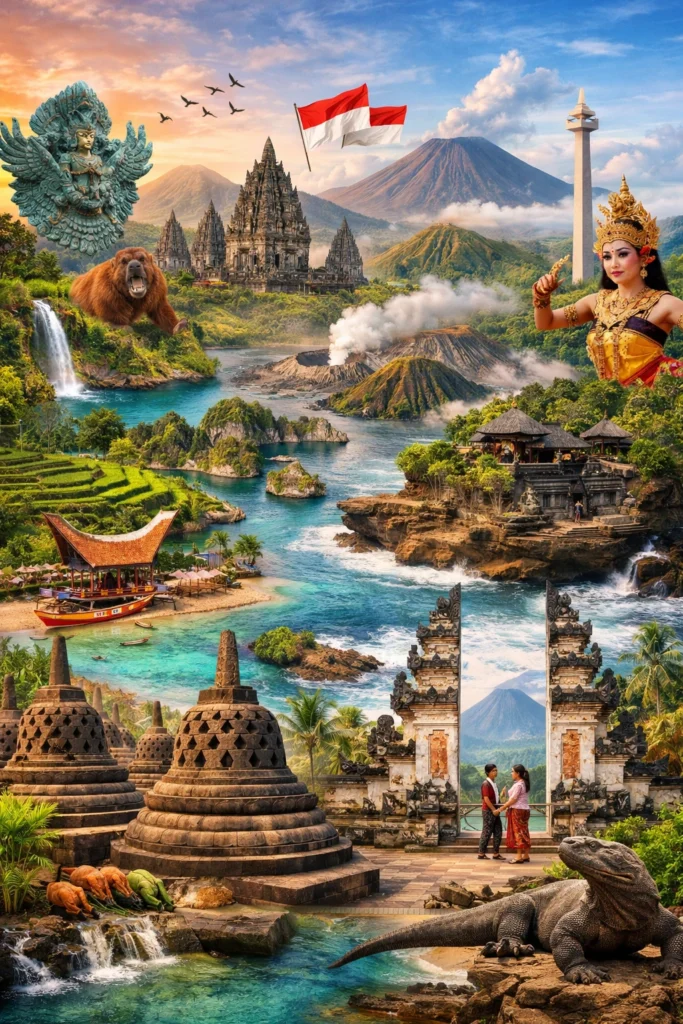
Indonesia is not just a country you visit once and check off a list. It is a place that slowly unfolds, island by island, story by story. With over 17,000 islands spread across Southeast Asia, Indonesia offers an extraordinary mix of tropical beaches, ancient temples, active volcanoes, rainforests, and deeply rooted traditions. From the spiritual calm of Bali to the raw wilderness of Papua, Indonesia rewards travelers who seek diversity, authenticity, and meaningful experiences.
As one of Southeast Asia’s most visited destinations, Indonesia attracts backpackers, honeymooners, solo travelers, digital nomads, and cultural explorers alike. Whether you are planning a short holiday or a slow, immersive journey, Indonesia has the depth to keep you inspired for months.
Overview of Indonesia
Indonesia is the world’s largest archipelago, located between the Indian and Pacific Oceans. It stretches across the equator, connecting Asia and Australia, and is home to more than 270 million people, making it the fourth most populous country globally.
For travelers, Indonesia is important because of its unmatched variety. In one trip, you can explore Hindu temples, Islamic heritage cities, colonial towns, untouched coral reefs, and volcanic highlands. Each island feels like a different country with its own culture, language, food, and rhythm of life.
AI Travel Planner
Jakarta, the capital city, serves as the main international gateway. Most international travelers arrive through Soekarno–Hatta International Airport, which connects Indonesia to major cities across Asia, Europe, Australia, and the Middle East.
Major Cities and Regions in Indonesia
Jakarta
Indonesia’s capital is a bustling megacity that reflects the country’s modern face. While often used as a transit point, Jakarta also offers historical sites, museums, nightlife, and culinary diversity.
Bali
The most famous Indonesian island, Bali is known for its beaches, temples, rice terraces, yoga retreats, and vibrant arts scene. It is ideal for both relaxation and cultural immersion.
Yogyakarta
Often called the cultural heart of Java, Yogyakarta is famous for its traditional arts, royal heritage, and proximity to Borobudur and Prambanan temples.
Lombok
Located east of Bali, Lombok offers quieter beaches, traditional villages, and access to Mount Rinjani, one of Indonesia’s most iconic volcanoes.
Sumatra
This large island is known for its rainforests, wildlife, volcanic lakes, and rich Batak culture. It is less touristy and ideal for offbeat travelers.
Komodo and Flores
These islands are famous for Komodo dragons, dramatic landscapes, and some of the best diving spots in Indonesia.
Famous Tourist Places in Indonesia
Bali
Location: Bali Island
Distance from Jakarta: Around 1,150 km
How to reach: Direct flights from Jakarta and international cities
Why visit: Bali is famous for its unique blend of spirituality, beaches, art, and wellness culture. From Ubud’s rice fields to Uluwatu’s cliffs, Bali offers a balanced mix of relaxation and exploration.
Borobudur Temple
Location: Central Java, near Yogyakarta
Distance from Jakarta: Around 560 km
How to reach: Flight or train to Yogyakarta, then road transport
Why visit: Borobudur is the world’s largest Buddhist temple and a UNESCO World Heritage Site. Sunrise at Borobudur is a deeply spiritual experience.
Prambanan Temple
Location: Near Yogyakarta
Distance from Jakarta: Around 560 km
How to reach: Flight or train to Yogyakarta
Why visit: This Hindu temple complex is known for its towering spires and detailed stone carvings, showcasing ancient Javanese architecture.
Komodo National Park
Location: East Nusa Tenggara
Distance from Jakarta: Around 2,000 km
How to reach: Flight to Labuan Bajo, followed by boat
Why visit: Home to the Komodo dragon, the park also offers pink beaches, crystal-clear waters, and exceptional marine biodiversity.
Lake Toba
Location: North Sumatra
Distance from Jakarta: Around 1,400 km
How to reach: Flight to Medan, then road travel
Why visit: Lake Toba is the largest volcanic lake in the world, offering peaceful scenery, cool weather, and insight into Batak culture.
Mount Bromo
Location: East Java
Distance from Jakarta: Around 800 km
How to reach: Flight or train to Surabaya, then road transport
Why visit: Mount Bromo is famous for its sunrise views over a volcanic landscape that feels otherworldly.
Landscapes and Natural Attractions
Indonesia’s landscapes are some of the most diverse on the planet. You will find active volcanoes in Java and Sumatra, dense rainforests in Kalimantan and Papua, coral reefs in Raja Ampat, and white-sand beaches across Bali, Lombok, and the Gili Islands.
Seasonal changes mainly revolve around dry and wet seasons rather than temperature. During the dry season, landscapes are greener in the highlands, while the wet season brings dramatic waterfalls and lush forests. Indonesia’s natural beauty is a major reason many travelers return multiple times.
Best Things to Do in Indonesia
Sightseeing
Explore ancient temples, colonial towns, traditional villages, and modern cities. Indonesia’s historical layers are visible everywhere.
Cultural Experiences
Attend temple ceremonies in Bali, watch traditional dance performances in Java, and learn local crafts such as batik making.
Nature Exploration
Visit national parks, volcanoes, waterfalls, and wildlife sanctuaries. Indonesia is one of the world’s biodiversity hotspots.
Relaxation
Enjoy beach resorts, wellness retreats, and spa experiences, especially in Bali and Lombok.
Adventure and Unique Experiences
Trekking and Hiking
Mount Rinjani and Mount Bromo offer unforgettable trekking experiences. The best season is during the dry months, and moderate fitness is recommended.
Scuba Diving and Snorkeling
Raja Ampat, Komodo, and the Gili Islands are among the best diving destinations in the world. Visibility is highest during the dry season.
Surfing
Indonesia is a global surfing hub, with Bali, Mentawai Islands, and Lombok offering world-class waves for all experience levels.
River Rafting
Available in Bali and Sumatra, river rafting combines adventure with scenic jungle landscapes.
Culture, History, and Heritage
Indonesia’s culture is shaped by centuries of trade, religion, and migration. Hinduism dominates Bali, Islam is prevalent across Java and Sumatra, and Christianity is common in parts of eastern Indonesia.
The country is home to several UNESCO World Heritage Sites, including Borobudur, Prambanan, and the cultural landscape of Bali. Traditional music, dance, architecture, and festivals play a major role in everyday life.
Despite modernization, many communities continue to preserve ancient customs, making cultural exploration one of Indonesia’s greatest rewards.
Local Insights for Travelers
Local Food
Indonesian cuisine is diverse and flavorful. Popular dishes include nasi goreng, rendang, satay, and gado-gado. Each region has its own specialties.
Travel Tips
Public transport varies by region. In cities, ride-hailing apps are widely used. In remote areas, renting a scooter or hiring a local driver is common.
Cultural Do’s and Don’ts
Dress modestly when visiting temples. Remove shoes before entering homes or sacred spaces. Always use your right hand when giving or receiving items.
Hidden Experiences
Visit local markets early in the morning, stay in family-run guesthouses, and explore villages away from popular tourist routes for a more authentic experience.
Practical Travel Information
Best Time to Visit
The dry season from May to September is ideal for most regions. The wet season from October to April offers fewer crowds and greener landscapes.
Ideal Trip Duration
A minimum of 10 to 14 days is recommended to explore one or two regions properly.
Budget Range
Indonesia suits all budgets. Budget travelers can manage on low daily expenses, while luxury travelers will find world-class resorts and private experiences.
Safety
Indonesia is generally safe for travelers. Basic precautions such as safeguarding valuables and respecting local customs are sufficient.
Connectivity
Internet access is good in cities and tourist areas. Local SIM cards are affordable and reliable.
Sample 5-Day Indonesia Itinerary
Day 1: Arrival in Bali
Explore local markets and enjoy a sunset at the beach.
Day 2: Ubud Exploration
Visit rice terraces, temples, and art villages.
Day 3: Temple and Beach Day
Explore Uluwatu Temple and nearby beaches.
Day 4: Day Trip or Adventure
Choose between a volcano trek, snorkeling, or a cultural workshop.
Day 5: Relaxation and Departure
Enjoy a spa session and prepare for departure.
Frequently Asked Questions
Is Indonesia safe for tourists?
Yes, Indonesia is generally safe, especially in tourist-friendly regions.
What is the best month to visit Indonesia?
June to August is considered the best period due to dry weather.
Is Indonesia good for solo travelers?
Yes, especially Bali, Yogyakarta, and Lombok, which are popular among solo travelers.
Is Indonesia budget-friendly?
Indonesia is one of the most affordable travel destinations in Asia.
Do I need a visa for Indonesia?
Many nationalities are eligible for visa-free or visa-on-arrival entry.
Internal Linking Suggestions for TravelBloomy
Link Indonesia travel guide to detailed guides on Bali, Jakarta, and Yogyakarta using natural anchor text.
Connect Indonesia destinations with nearby Southeast Asian guides such as Thailand and Malaysia.
Interlink island-specific posts like Lombok and Komodo with broader Indonesia travel content.
Conclusion
Indonesia is a destination that invites slow travel and deep discovery. Its diversity cannot be rushed, and its stories reveal themselves only when you spend time listening, observing, and connecting with local life. Whether you come for beaches, culture, adventure, or personal reflection, Indonesia leaves a lasting imprint on every traveler. For those willing to explore beyond the surface, it becomes not just a destination, but a journey of perspective and meaning.