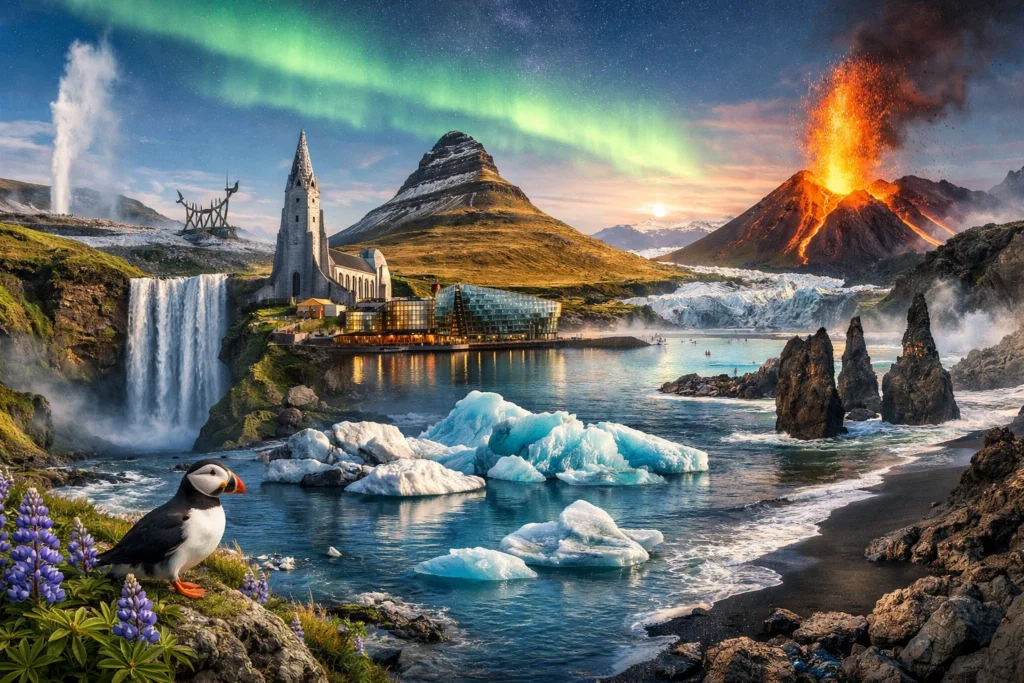
Iceland is one of those rare destinations that feels almost unreal the moment you arrive. From roaring waterfalls and black sand beaches to steaming geothermal fields and glowing northern skies, this Nordic island offers raw, untouched beauty at every turn. Known as the Land of Fire and Ice, Iceland blends glaciers and volcanoes, ancient sagas and modern design, solitude and adventure. If you are looking for a destination that feels wild, peaceful, and deeply inspiring, Iceland deserves a top spot on your travel list.
This detailed Iceland travel guide is designed in TravelBloomy style to help you plan a meaningful, well-informed trip. Whether you are a solo traveler, a nature lover, or someone chasing once-in-a-lifetime experiences, Iceland rewards slow exploration and curiosity.
Overview of Iceland
Iceland is a Nordic island country located in the North Atlantic Ocean, between Greenland and mainland Europe. Despite its name, much of Iceland is surprisingly green during summer, while its glaciers and ice caps cover about 11 percent of the land.
For travelers, Iceland is important because it offers some of the most dramatic natural landscapes on Earth in a relatively compact area. You can see waterfalls, volcanoes, geysers, glaciers, lava fields, and beaches within a single day’s drive.
AI Travel Planner
The main gateway city is Reykjavík, the capital and cultural heart of Iceland. Almost all international travelers arrive via Keflavík International Airport, located about 50 km from Reykjavík.
Major Cities and Regions of Iceland
Reykjavík
Iceland’s capital and largest city is the cultural, culinary, and nightlife hub of the country. It is also the starting point for most tours and road trips.
South Coast
The most popular region for first-time visitors, known for waterfalls, black sand beaches, glaciers, and volcanoes.
Golden Circle
A classic sightseeing route near Reykjavík featuring geysers, tectonic plates, and waterfalls.
Snæfellsnes Peninsula
Often called “Iceland in Miniature,” this region showcases volcanoes, coastal cliffs, and charming fishing villages.
North Iceland
Home to Akureyri and Lake Mývatn, this region offers geothermal areas, whale watching, and fewer crowds.
Eastfjords
A remote and peaceful area with dramatic fjords, winding roads, and small fishing towns.
Westfjords
One of the least visited but most stunning regions, known for cliffs, fjords, and wildlife.
Famous Tourist Places in Iceland
Golden Circle
Region: Southwest Iceland
Distance from Reykjavík: 40–120 km depending on stops
How to reach: Guided tours, rental car, or bus
Why it is famous: The Golden Circle is Iceland’s most popular route and includes three iconic sites.
Þingvellir National Park is where the Eurasian and North American tectonic plates meet, and it holds deep historical importance as the site of Iceland’s first parliament. Geysir geothermal area features erupting hot springs, including Strokkur, which erupts every few minutes. Gullfoss Waterfall is a powerful, multi-tiered waterfall that showcases Iceland’s raw natural force.
Seljalandsfoss
Region: South Coast
Distance from Reykjavík: около 120 km
How to reach: Car via Route 1, guided South Coast tours
Why it is famous: Seljalandsfoss is unique because you can walk behind the waterfall, offering a rare and immersive experience.
Skógafoss
Region: South Coast
Distance from Reykjavík: about 150 km
How to reach: Car or guided tour
Why it is famous: This massive waterfall is known for its width, power, and frequent rainbows on sunny days.
Reynisfjara Black Sand Beach
Region: Near Vík, South Coast
Distance from Reykjavík: about 180 km
How to reach: Car or tour
Why it is famous: Reynisfjara is famous for its black volcanic sand, basalt columns, and dramatic ocean waves. Visitors must be cautious due to strong sneaker waves.
Jökulsárlón Glacier Lagoon
Region: Southeast Iceland
Distance from Reykjavík: about 380 km
How to reach: Car over two days, multi-day tours
Why it is famous: Icebergs float peacefully in a glacial lagoon before drifting into the nearby Diamond Beach. It is one of Iceland’s most photogenic locations.
Blue Lagoon
Region: Reykjanes Peninsula
Distance from Reykjavík: about 50 km
How to reach: Airport transfers, car, or tour
Why it is famous: This geothermal spa offers milky-blue warm waters rich in minerals, set in a lava field. It is ideal for relaxation after long travel.
Landscapes and Natural Attractions
Iceland’s landscapes feel constantly in motion. Glaciers like Vatnajökull, Europe’s largest ice cap, contrast with active volcanoes such as Hekla and Eyjafjallajökull. The country is dotted with lava fields, moss-covered plains, powerful rivers, and dramatic fjords.
Seasonal changes are dramatic. Summer brings endless daylight, green valleys, and accessible highlands. Winter transforms the country into a snowy wonderland, perfect for ice caves and northern lights viewing.
Best Things to Do in Iceland
Sightseeing is only the beginning in Iceland. You can chase waterfalls along the South Coast, explore Reykjavík’s museums and cafes, and drive scenic coastal roads.
Cultural activities include visiting local swimming pools, exploring Icelandic design stores, and learning about Viking history through museums and storytelling.
Nature experiences range from soaking in hot springs to hiking volcanic trails and watching whales along the coast.
For relaxation, geothermal spas and quiet countryside stays offer unmatched peace.
Adventure and Experiences
Iceland is an adventure lover’s paradise.
Trekking and hiking are popular in areas like Landmannalaugar and Þórsmörk during summer, suitable for moderate to experienced hikers.
Glacier hiking and ice climbing are available year-round with guides, especially on Sólheimajökull and Vatnajökull.
Snorkeling between tectonic plates in Silfra is a unique experience, best for confident swimmers.
Whale watching is popular from Reykjavík, Akureyri, and Húsavík, especially from May to September.
In winter, ice cave exploration and snowmobiling are top experiences.
Culture, History, and Heritage
Icelandic culture is deeply rooted in Viking history, sagas, and a strong connection to nature. Storytelling, literature, and music play an important role in daily life.
Þingvellir National Park is a UNESCO World Heritage Site, valued for both geological and historical reasons. Turf houses, churches, and modern Nordic architecture reflect Iceland’s evolving lifestyle.
Icelanders value equality, sustainability, and simplicity, which travelers often notice in everyday interactions.
Local Insights You Should Know
Locals rely heavily on weather forecasts, and so should travelers. Weather can change rapidly, so flexibility is key.
Icelandic food includes lamb, fresh fish, skyr (a yogurt-like dairy product), and hearty soups. Trying local bakeries and hot dogs is a must.
Always respect nature by staying on marked paths. Off-road driving is illegal and damages fragile landscapes.
Tap water in Iceland is extremely clean and safe to drink, so carrying a reusable bottle is practical and eco-friendly.
Practical Travel Information
Best time to visit
June to August is best for road trips, hiking, and mild weather. September to March is ideal for northern lights and winter adventures.
Ideal trip duration
A 5 to 7-day trip covers highlights, while 10 to 14 days is ideal for a full Ring Road journey.
Budget range
Iceland is expensive. Budget travelers should expect higher costs for food and accommodation. Mid-range travelers enjoy comfort, while luxury travelers can access premium lodges and guided experiences.
Safety tips
Iceland is one of the safest countries in the world. Follow weather warnings, respect ocean conditions, and never underestimate nature.
Connectivity and transport
Internet coverage is excellent. Renting a car is the best way to explore independently.
Sample 5-Day Iceland Itinerary
Day 1
Arrive at Keflavík, visit Blue Lagoon, explore Reykjavík
Day 2
Golden Circle tour including Þingvellir, Geysir, and Gullfoss
Day 3
South Coast waterfalls, black sand beach, overnight near Vík
Day 4
Glacier lagoon and Diamond Beach, return west
Day 5
Explore Reykjavík, museums, cafes, departure
Frequently Asked Questions About Iceland
Is Iceland safe for solo travelers?
Yes, Iceland is extremely safe and ideal for solo travel.
Is Iceland budget-friendly?
It is expensive, but costs can be managed with planning.
Can I see the northern lights?
Yes, from September to March, with clear skies.
Do I need a visa for Iceland?
Iceland is part of the Schengen Area, so visa rules depend on your nationality.
Is driving in Iceland easy?
Yes, but weather and road conditions require caution.
Internal Linking Suggestions for TravelBloomy
Link this guide naturally with Reykjavík travel guides, Nordic destinations like Norway and Finland, and adventure travel articles on glaciers and northern lights. You can also connect it with European road trip content and winter travel guides.
Conclusion
Iceland is not a destination you simply visit; it is a place you experience deeply. Its landscapes remind you of nature’s power and beauty, while its quiet roads and open spaces invite reflection. Whether you come for adventure, solitude, or inspiration, Iceland leaves a lasting impression. Travel slowly, respect the land, and allow Iceland to unfold its magic at its own pace.