
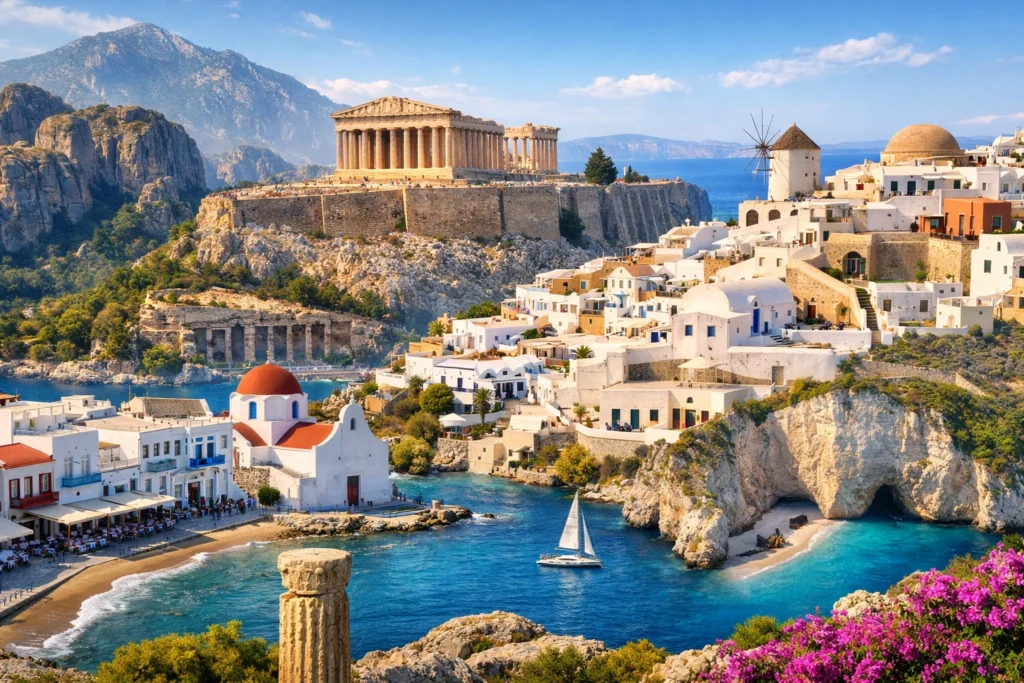
Greece is one of those rare destinations where history, nature, culture, and everyday life blend seamlessly. From sun-bleached ruins older than most civilizations to island villages where time seems to slow down, Greece offers travelers an experience that feels both profound and deeply relaxing. For travelers searching for culture-rich journeys, island escapes, and meaningful travel experiences, Greece remains an evergreen destination worth visiting at least once in a lifetime.
As a country shaped by mythology, philosophy, and the Aegean Sea, Greece attracts everyone from history lovers and food enthusiasts to honeymooners and solo travelers. This guide to Greece is designed to help you plan a real, practical trip while discovering why this Mediterranean nation continues to inspire travelers from across the world.
Overview of Greece
Greece is located in southeastern Europe, bordered by Albania, North Macedonia, Bulgaria, and Turkey, with coastlines stretching along the Aegean, Ionian, and Mediterranean seas. The country is made up of a mountainous mainland and more than 6,000 islands and islets, of which around 200 are inhabited.
For travelers, Greece is important because it offers unmatched diversity in a relatively compact space. You can explore ancient archaeological sites in the morning, hike dramatic mountain landscapes by afternoon, and end the day swimming in turquoise waters or dining by the sea.
AI Travel Planner
Athens, the capital and main gateway city, is the primary entry point for international travelers. Athens International Airport connects Greece to Europe, Asia, and the Middle East, making it an easy destination to reach.
Major Cities and Regions in Greece
Athens
The heart of ancient Greece and modern Greek life, Athens is home to iconic landmarks like the Acropolis and Parthenon. It is also a vibrant city with cafes, markets, and nightlife.
Santorini
Famous for its whitewashed houses and blue domes, Santorini is a volcanic island known for sunsets, romance, and dramatic caldera views.
Crete
Greece’s largest island, Crete offers a mix of ancient ruins, rugged mountains, long beaches, and traditional villages.
Thessaloniki
A cultural and culinary hub in northern Greece, Thessaloniki is known for Byzantine monuments, youthful energy, and rich food culture.
Mykonos
Popular for its beaches and nightlife, Mykonos attracts travelers looking for energy, style, and vibrant social scenes.
Peloponnese
A mainland region rich in history, featuring ancient cities, olive groves, mountains, and quieter coastal towns.
Famous Tourist Places in Greece
Acropolis of Athens
City: Athens
Distance from Athens city center: 0 km
How to reach: Metro, bus, taxi, or on foot
The Acropolis is the most iconic symbol of Greece and Western civilization. Perched above Athens, it houses the Parthenon, Erechtheion, and Temple of Athena Nike. Visiting the Acropolis offers insight into ancient Greek philosophy, democracy, and architecture.
Santorini Caldera
Region: Santorini Island
Distance from Athens: 230 km
How to reach: Flight or ferry from Athens
The caldera was formed by a massive volcanic eruption, creating dramatic cliffs overlooking the Aegean Sea. Santorini’s caldera towns like Oia and Fira are famous for sunset views, luxury stays, and scenic walks.
Knossos Palace
Region: Crete
Distance from Athens: 320 km
How to reach: Flight to Heraklion, then local transport
Knossos is the largest Bronze Age archaeological site in Greece and the center of the ancient Minoan civilization. It is closely linked to Greek myths like the Minotaur and Labyrinth.
Meteora Monasteries
Region: Thessaly
Distance from Athens: 350 km
How to reach: Train or car from Athens
Meteora is one of Greece’s most surreal landscapes, featuring monasteries built atop towering rock pillars. It is both a spiritual site and a visual masterpiece.
Delphi
Region: Central Greece
Distance from Athens: 180 km
How to reach: Bus or car
Once considered the center of the ancient world, Delphi was home to the Oracle of Apollo. The site offers mountain views, temples, and deep historical significance.
Navagio Beach
Region: Zakynthos Island
Distance from Athens: 260 km
How to reach: Flight or ferry to Zakynthos, then boat
Also known as Shipwreck Beach, Navagio is one of Greece’s most photographed beaches, surrounded by towering limestone cliffs and bright blue waters.
Landscapes and Natural Attractions
Greece’s natural beauty goes far beyond its famous islands. The mainland features rugged mountains like Mount Olympus, lush forests in the north, and fertile valleys in regions like Thessaly. The country has thousands of kilometers of coastline, ranging from sandy beaches to dramatic rocky shores.
Seasonal changes add to Greece’s appeal. Spring brings wildflowers and pleasant hiking weather. Summer offers clear seas and island life. Autumn is ideal for cultural exploration and food travel, while winter reveals snow-covered mountains and quieter cities.
Lakes like Lake Plastira, gorges such as Samaria Gorge in Crete, and rivers perfect for rafting add variety to Greece’s landscapes.
Best Things to Do in Greece
Sightseeing
Explore ancient ruins, museums, and historic cities like Athens, Delphi, and Thessaloniki.
Cultural Activities
Attend local festivals, experience Greek music and dance, and explore traditional villages.
Nature Experiences
Hike mountain trails, swim in crystal-clear waters, explore caves, and walk coastal paths.
Relaxation and Exploration
Enjoy slow island life, seaside cafes, thermal springs, and scenic sunsets.
Adventure and Unique Experiences
Trekking and Hiking
Best season: Spring and autumn
Popular routes include Mount Olympus, Samaria Gorge, and Meteora trails. Suitable for beginners to experienced hikers.
Scuba Diving and Snorkeling
Best season: May to October
The Aegean and Ionian seas offer shipwrecks, caves, and marine life.
Paragliding
Available in coastal regions and islands like Lefkada, offering stunning aerial views.
River Rafting
Best season: Spring
Rivers like the Voidomatis in Epirus are ideal for rafting beginners and nature lovers.
Sailing and Island Hopping
A classic Greek adventure, ideal from late spring to early autumn.
Culture, History, and Heritage
Greek culture is deeply rooted in its ancient past while remaining very much alive today. Greece is the birthplace of democracy, philosophy, theater, and the Olympic Games. UNESCO World Heritage Sites include the Acropolis, Delphi, Meteora, Mystras, and the medieval city of Rhodes.
Greek life revolves around food, family, and community. Architecture varies from ancient temples to Byzantine churches and Cycladic island homes. Music, storytelling, and hospitality play a central role in everyday life.
Local Insights for Travelers
Locals value slow travel and meaningful connections. Meals are long and social, and rushing is often discouraged.
Greek food habits include sharing dishes. Meze plates, fresh seafood, olive oil-based meals, and local wines are staples. Try dishes like moussaka, souvlaki, spanakopita, and fresh Greek salads.
Public transport is reliable in cities, but renting a car is useful for islands and rural areas. Ferries are an essential part of Greek travel, and schedules can change with weather.
Dress modestly when visiting monasteries and churches. A light cover-up is usually sufficient.
For authentic experiences, visit local markets, attend village festivals, and explore lesser-known islands instead of only popular hotspots.
Practical Travel Information
Best Time to Visit
April to June and September to October offer the best balance of weather, crowds, and prices.
Ideal Trip Duration
10 to 14 days allows you to explore Athens, one or two islands, and a mainland destination.
Budget Range
Budget travelers: €60–€90 per day
Mid-range travelers: €120–€180 per day
Luxury travelers: €250+ per day
Safety
Greece is generally very safe for travelers, including solo travelers. Basic precautions apply in crowded areas.
Connectivity and Transport
Wi-Fi is widely available. Local SIM cards are affordable. Ferries, buses, trains, and domestic flights make travel easy.
Sample 7-Day Greece Itinerary
Day 1: Arrive in Athens, explore Plaka and Monastiraki
Day 2: Acropolis, Acropolis Museum, sunset at Lycabettus Hill
Day 3: Travel to Santorini, evening in Fira
Day 4: Oia village, caldera views, sunset
Day 5: Santorini beaches and volcanic tour
Day 6: Return to Athens, day trip to Delphi
Day 7: Shopping, local food, departure
FAQs About Visiting Greece
Is Greece safe for tourists?
Yes, Greece is considered very safe for tourists, including solo travelers.
What is the best month to visit Greece?
May, June, September, and October are ideal for most travelers.
Is Greece budget-friendly?
Yes, especially if you avoid peak summer and luxury islands.
Do I need a visa to visit Greece?
Greece is part of the Schengen Area. Visa requirements depend on your nationality.
Is Greece good for solo travelers?
Absolutely. Greece is welcoming, social, and easy to navigate.
Internal Linking Suggestions for TravelBloomy
Link Greece travel guide to detailed Athens travel guide
Link Greece islands guide to Santorini and Mykonos travel pages
Link Greece to nearby destinations like Italy and Turkey travel guides
Link island hopping guides within Greece-related content
Conclusion
Greece is more than a destination; it is a feeling shaped by ancient stories, sea breezes, shared meals, and timeless landscapes. Whether you come for history, nature, adventure, or quiet moments by the water, Greece rewards travelers who slow down and explore with curiosity. It is a place where every journey feels personal, and every return feels like coming home.