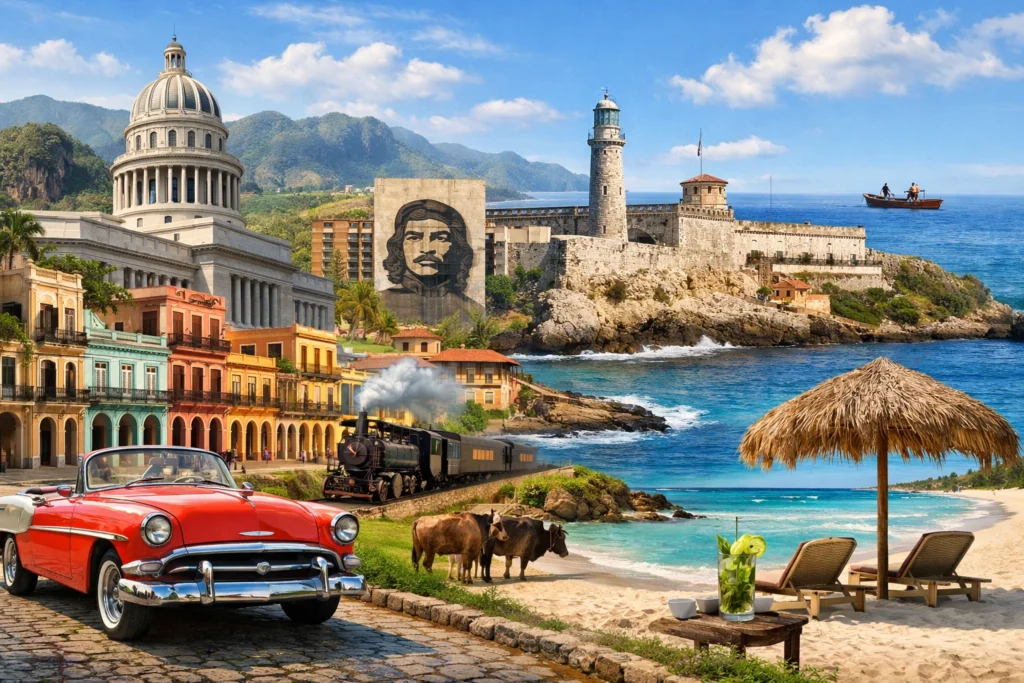
Cuba is one of the most fascinating destinations in the Caribbean, where vintage cars roll past pastel buildings and music floats through colonial streets. A Cuba travel experience is not just about beaches and rum; it’s about stepping into a living museum of history, rhythm, resilience, and raw beauty. From Havana’s vibrant plazas to the white sands of Varadero and the tobacco fields of Viñales, Cuba invites slow travelers to observe, listen, and connect deeply.
Cuba is not just a destination—it’s an experience frozen in time. From pastel-colored streets and vintage cars to rhythmic music and turquoise waters, Cuba offers a rare blend of history, culture, and natural beauty. If you’re planning your next unforgettable trip, this Cuba Travel Guide will help you explore the island like a pro.
For those seeking a destination that feels authentic, culturally rich, and visually unforgettable, Cuba offers something rare — a place where time moves gently, and every corner tells a story.
Overview of Cuba
Cuba is the largest island in the Caribbean, located south of Florida (USA), west of Haiti and the Dominican Republic, and north of Jamaica. Surrounded by the Caribbean Sea, the Gulf of Mexico, and the Atlantic Ocean, it holds a strategic and historical significance in the region.
AI Travel Planner
The capital city, Havana (La Habana), is the main gateway for international travelers. José Martí International Airport connects Cuba with Europe, Canada, Latin America, and select global destinations. Havana serves as the cultural and political heart of the country, making it the ideal starting point for exploring Cuba.
Located in the Caribbean, Cuba is known for its colonial architecture, vibrant culture, and warm hospitality. The capital city, Havana, is the heart of the country, filled with historic charm, lively streets, and iconic landmarks.
Cuba is important for travelers not just because of its beaches, but because of its layered identity — Spanish colonial architecture, African cultural influence, revolutionary history, and a deep-rooted love for music and art.
Major Cities and Regions of Cuba
Cuba is gaining popularity among global travelers, yet it still retains its authentic charm. In 2026, improved tourism infrastructure, better accommodations, and increased connectivity make it easier than ever to explore.
Reasons to visit:
- Unique vintage vibe unlike anywhere else
- Rich history and revolutionary heritage
- Stunning beaches and coral reefs
- Affordable travel options
Havana
The capital city known for Old Havana’s colonial architecture, classic American cars, seaside promenades, and vibrant nightlife.
Varadero
Cuba’s most famous beach destination, offering luxury resorts and crystal-clear Caribbean waters.
Trinidad
A UNESCO-listed colonial town known for cobblestone streets, colorful houses, and preserved 18th-century architecture.
Viñales
A rural valley famous for tobacco farms, dramatic limestone hills (mogotes), and scenic countryside landscapes.
Santiago de Cuba
Located in eastern Cuba, this city is considered the birthplace of Cuban music and has strong Afro-Caribbean roots.
Cienfuegos
Known as the “Pearl of the South,” this coastal city showcases French-influenced architecture and a relaxed waterfront atmosphere.
Famous Tourist Places in Cuba
Old Havana (Habana Vieja) – Havana
Distance from Havana Airport: 20 km
How to reach: Taxi or private transfer from José Martí International Airport (30–40 minutes).
Why visit: A UNESCO World Heritage Site, Old Havana is filled with colonial squares, cathedrals, museums, and lively streets. Plaza Vieja, Plaza de la Catedral, and El Capitolio are must-sees. Walking here feels like stepping into a vibrant open-air museum.
Varadero Beach – Varadero
Distance from Havana: 140 km
How to reach: 2.5–3 hours by road via bus or taxi; Varadero also has its own international airport.
Why visit: Known for its powdery white sand and turquoise water, Varadero is perfect for relaxation, snorkeling, and resort stays. It’s ideal for travelers looking for classic Caribbean beach luxury.
Viñales Valley – Pinar del Río Province
Distance from Havana: 180 km
How to reach: 3–4 hours by road via bus, shared taxi, or rental car.
Why visit: This UNESCO-listed valley is famous for tobacco plantations and dramatic limestone formations. Travelers can explore caves, visit local farms, and learn about cigar-making traditions.
Trinidad – Sancti Spíritus Province
Distance from Havana: 315 km
How to reach: 5–6 hours by road; bus services connect from Havana and Varadero.
Why visit: One of Cuba’s most picturesque towns, Trinidad offers colonial mansions, live salsa music in Plaza Mayor, and access to nearby Playa Ancón beach.
Castillo del Morro – Santiago de Cuba
Distance from Santiago Airport: 15 km
How to reach: Taxi from Santiago city center (20 minutes).
Why visit: A historic fortress overlooking the sea, offering panoramic coastal views and insight into Cuba’s colonial defense system.
Landscapes and Natural Attractions
Cuba’s landscapes go far beyond beaches.
Beaches
Varadero, Playa Ancón (near Trinidad), and Cayo Coco offer pristine sands and calm waters. The Cayos (small islands) along the northern coast are known for untouched beauty and coral reefs.
Mountains
The Sierra Maestra mountain range in eastern Cuba offers hiking opportunities and historical significance linked to the Cuban Revolution.
Valleys
Viñales Valley is one of the most scenic rural regions in the Caribbean, especially during sunrise and sunset.
National Parks
Alejandro de Humboldt National Park is one of the most biodiverse places in the Caribbean.
Seasonal Highlights
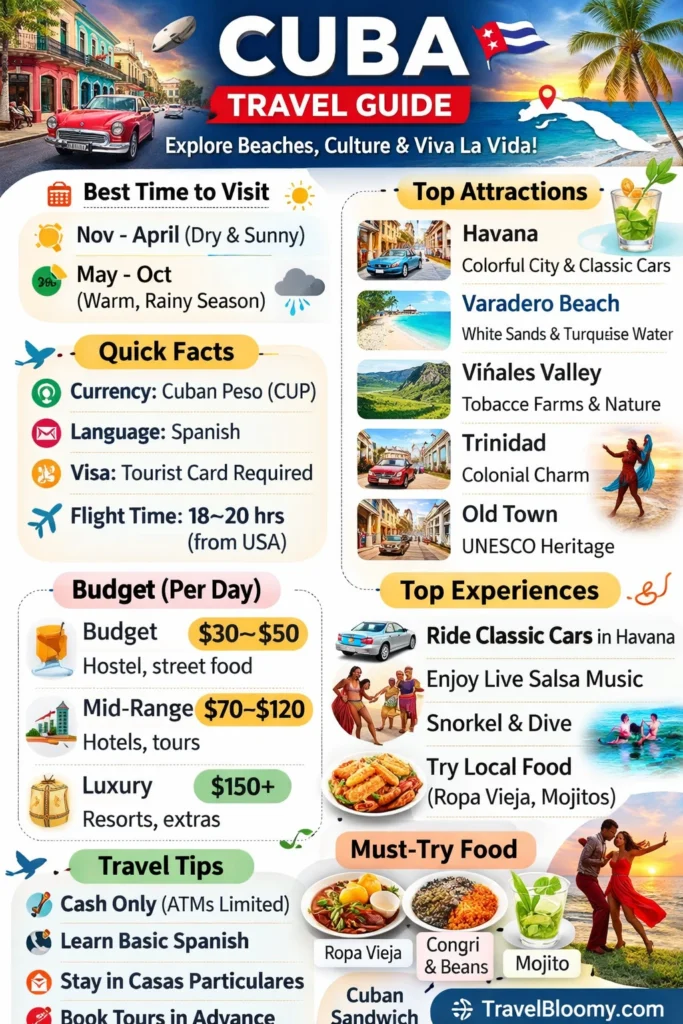
The dry season (November to April) offers pleasant weather with low humidity. The rainy season (May to October) brings lush green landscapes but occasional tropical showers.
Best Things to Do in Cuba
Explore Havana on Foot
Wander through Old Havana, visit museums, sip coffee in local cafés, and watch street musicians perform.
Relax on Caribbean Beaches
Spend time at Varadero or the Cayos for sunbathing and swimming.
Learn Salsa Dancing
Take a salsa lesson in Havana or Trinidad and experience Cuban rhythm firsthand.
Visit a Tobacco Farm
In Viñales, learn about traditional cigar-making directly from local farmers.
Attend Live Music Nights
Cuba is the birthplace of son, salsa, and rumba. Evening music sessions are unforgettable.
Adventure and Experiences
Scuba Diving and Snorkeling
Best season: November to April
Experience level: Beginner to advanced
Cayo Coco and the Bay of Pigs offer vibrant coral reefs and clear visibility.
Hiking in Sierra Maestra
Best season: Dry months
Experience level: Moderate
Trek through lush forests and historical trails linked to revolutionary history.
Cave Exploration in Viñales
Explore limestone caves such as Cueva del Indio, suitable for most travelers.
Cycling Tours
Cycle through rural Cuba for an immersive countryside experience.
Culture, History, and Heritage
Cuba’s identity is shaped by Spanish colonization, African heritage, and revolutionary history.
UNESCO Sites
Old Havana, Trinidad, and Viñales Valley are UNESCO World Heritage Sites.
Music and Dance
Salsa, son cubano, and Afro-Cuban rhythms are deeply embedded in daily life.
Architecture
Baroque churches, neoclassical buildings, colorful colonial homes, and art deco structures coexist in Cuban cities.
Revolutionary History
Museums in Havana and Santiago de Cuba tell stories of Fidel Castro, Che Guevara, and the Cuban Revolution.
Local Insights for Travelers
Stay in Casas Particulares
Instead of hotels, consider staying in locally run guesthouses for a more authentic experience.
Cash is Important
Credit cards are limited; carry sufficient cash in euros or Canadian dollars (check latest currency policies before travel).
Slow Internet
Wi-Fi access can be limited. Embrace digital detox and enjoy real-world connections.
Food to Try
Ropa vieja (shredded beef), congrí (rice and beans), tostones (fried plantains), and Cuban sandwiches.
Cultural Tips
Dress modestly in churches. Greet locals warmly. Tipping is appreciated but modest.
Practical Travel Information
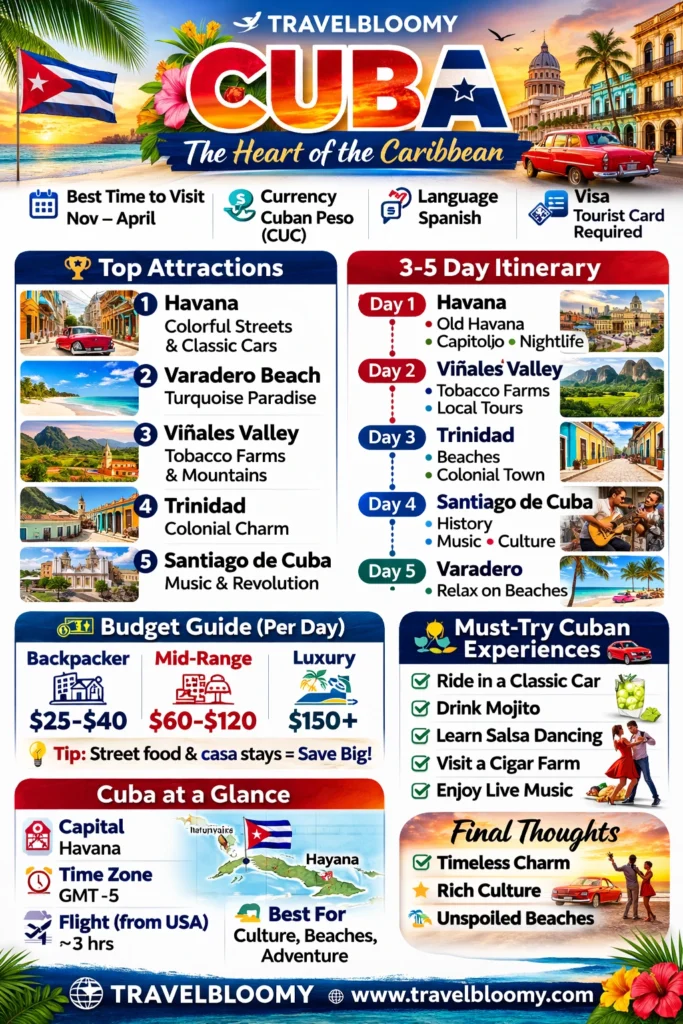
Best Time to Visit
November to April (dry season, pleasant weather).
Ideal Trip Duration
7–10 days to explore Havana, Viñales, Trinidad, and Varadero comfortably.
Budget Range
Budget: $40–70 per day
Mid-range: $80–150 per day
Luxury resorts: $200+ per night
Safety
Cuba is considered one of the safer Caribbean destinations, but always use standard precautions.
Connectivity
Public Wi-Fi zones are available in major cities. Purchase local internet cards for access.
Sample 7-Day Cuba Itinerary
Day 1–2: Havana
Explore Old Havana, Malecón, museums, and enjoy live music.
Day 3: Viñales
Visit tobacco farms and explore caves.
Day 4–5: Trinidad
Walk through colonial streets and relax at Playa Ancón.
Day 6–7: Varadero
Unwind on the beach and enjoy water activities.
FAQs About Traveling to Cuba
Is Cuba safe for tourists?
Yes, Cuba is generally safe, though petty theft can occur in busy areas.
What is the best month to visit Cuba?
December to March offers ideal weather.
Is Cuba good for solo travelers?
Yes, especially for those interested in culture and photography.
Is Cuba budget-friendly?
Yes, especially if staying in casas particulares and eating locally.
Do I need a visa to visit Cuba?
Most travelers need a tourist card; requirements vary by nationality.
Internal Travel Inspiration
If you love vibrant island cultures like Cuba, you may also enjoy exploring the Caribbean charm of Mauritius or the wildlife experiences in Tanzania. For a different cultural contrast, consider reading our guide to Mexico or planning a South America journey starting with Brazil.
Conclusion
Cuba is not just a beach destination; it is a soulful, layered country where music, history, and human warmth define the travel experience. It invites you to slow down, disconnect from routine, and immerse yourself in stories carried through architecture, rhythm, and sea breeze.
Travel to Cuba with curiosity and patience. Sit in a quiet plaza, listen to a guitar echo through colonial walls, and let the island reveal itself gently. That is where the real magic of Cuba lives.