
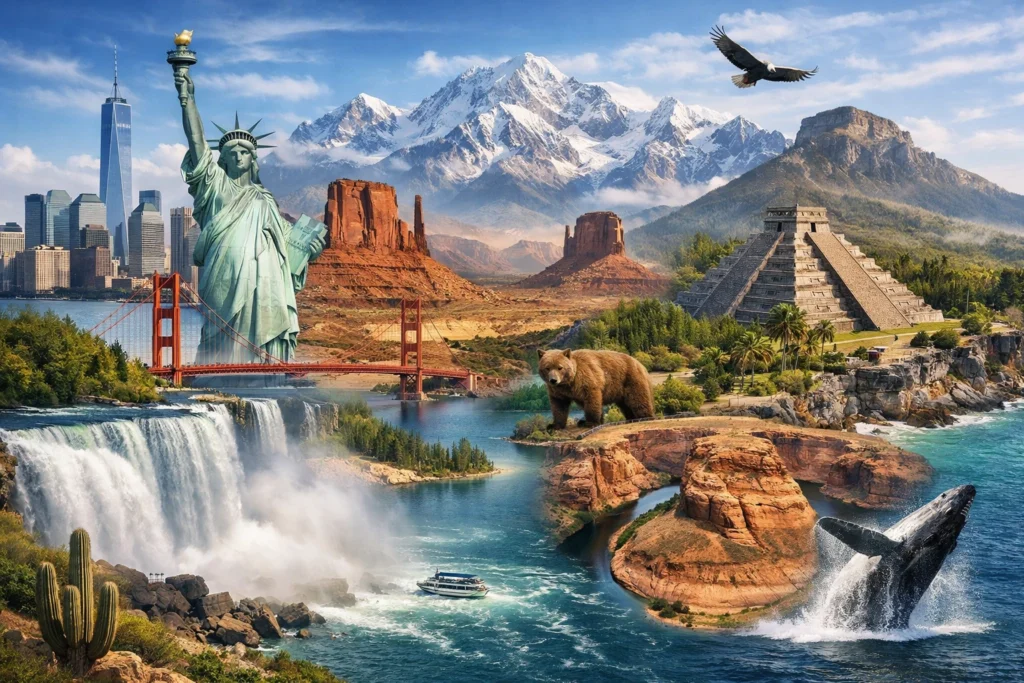
North America is one of the most diverse travel destinations on Earth, offering everything from snow-capped mountains and vast deserts to vibrant cities and ancient cultural sites. Stretching from the Arctic regions of Canada to the tropical beaches of Mexico and the Caribbean, North America is a continent where modern lifestyles blend seamlessly with deep-rooted traditions and natural wonders. For travelers seeking variety, flexibility, and unforgettable experiences, North America stands out as a destination worth exploring slowly and thoughtfully.
North America is not just a destination—it’s a collection of countless experiences waiting to unfold. From the bustling streets of New York City to the breathtaking wilderness of Banff National Park and the vibrant culture of Mexico City, this continent offers something for every traveler.
Whether you’re planning a solo adventure, a romantic getaway, or a group exploration, this North America Travel Guide will help you design your perfect journey.
In this North America travel guide, you’ll discover the continent’s major regions, famous tourist places, landscapes, cultural depth, and practical travel tips to help you plan meaningful journeys across countries and cultures.
AI Travel Planner
Overview of North America
North America lies entirely in the Northern Hemisphere and is bordered by the Arctic Ocean to the north, the Atlantic Ocean to the east, and the Pacific Ocean to the west. The continent includes three major countries: the United States, Canada, and Mexico, along with Central America and island nations of the Caribbean.
North America is important for travelers because of its excellent infrastructure, wide range of climates, and cultural diversity. You can explore modern megacities, untouched wilderness, indigenous heritage sites, and world-famous road trips within a single continent.
Major international gateway cities include New York City, Los Angeles, Toronto, Vancouver, Mexico City, and Miami, which connect North America to nearly every part of the world.
Major Countries and Regions in North America
United States
The United States offers incredible variety, from iconic cities like New York and San Francisco to natural wonders such as the Grand Canyon and Yellowstone National Park. It is ideal for road trips, city breaks, and outdoor adventures.
Canada
Canada is known for its pristine nature, friendly cities, and breathtaking landscapes. From the Rocky Mountains to vibrant cities like Toronto and Vancouver, Canada appeals to nature lovers and urban explorers alike.
Mexico
Mexico combines ancient civilizations, colonial architecture, vibrant festivals, and stunning beaches. It is famous for Mayan and Aztec ruins, rich cuisine, and warm hospitality.
Central America
Countries like Costa Rica, Guatemala, and Panama offer rainforests, volcanoes, wildlife, and cultural heritage. This region is perfect for eco-tourism and adventure travel.
Caribbean
The Caribbean islands are known for turquoise waters, relaxed island life, and cultural fusion influenced by African, European, and indigenous traditions.
Famous Tourist Places in North America
New York City, USA
Location: United States
Distance from gateway city: 0 km (gateway itself)
How to reach: International flights, trains, buses, metro
Why it is famous: New York City is a global cultural and financial hub, known for landmarks like Times Square, Central Park, Broadway, and the Statue of Liberty.
Grand Canyon, USA
Location: Arizona, USA
Distance from Las Vegas: approx. 450 km
How to reach: Road trip, tour buses, domestic flights to nearby cities
Why it is famous: One of the world’s most impressive natural wonders, carved by the Colorado River over millions of years.
Banff National Park, Canada
Location: Alberta, Canada
Distance from Calgary: approx. 130 km
How to reach: Road trip, train, domestic flights to Calgary
Why it is famous: Turquoise lakes, mountain peaks, wildlife sightings, and scenic drives make Banff a must-visit for nature lovers.
Vancouver, Canada
Location: British Columbia, Canada
Distance from Vancouver International Airport: approx. 15 km
How to reach: International flights, ferries, trains
Why it is famous: A coastal city surrounded by mountains, known for outdoor activities, food culture, and relaxed urban lifestyle.
Mexico City, Mexico
Location: Central Mexico
Distance from gateway city: 0 km (gateway itself)
How to reach: International flights, metro, buses
Why it is famous: A vibrant capital with ancient ruins, museums, colonial architecture, and one of the world’s best food scenes.
Chichén Itzá, Mexico
Location: Yucatán Peninsula
Distance from Cancún: approx. 200 km
How to reach: Road, tour buses
Why it is famous: A UNESCO World Heritage Site and one of the New Seven Wonders of the World, representing Mayan civilization.
Niagara Falls, USA/Canada
Location: Border of Ontario and New York
Distance from Toronto: approx. 130 km
How to reach: Road, train, bus
Why it is famous: One of the most powerful waterfalls in the world, offering dramatic views and boat experiences.
Landscapes and Natural Attractions
North America features some of the most diverse landscapes on the planet. The Rocky Mountains stretch from Canada to the United States, offering skiing, hiking, and scenic drives. The Great Plains provide vast open spaces, while deserts like the Mojave and Sonoran showcase stark beauty.
The continent is home to dense forests, massive lakes such as the Great Lakes, tropical beaches in Mexico and the Caribbean, and Arctic tundra in northern Canada. Seasonal changes add to the charm, with autumn foliage, snowy winters, spring blooms, and sunny summers creating different travel experiences throughout the year.
North America stands out because of its diversity. Within a single trip, you can explore modern cities, ancient ruins, tropical beaches, and snow-covered mountains.
Best Things to Do in North America
Sightseeing in iconic cities like New York, Toronto, and Los Angeles offers cultural immersion and architectural beauty. Cultural activities include visiting museums, attending music festivals, and exploring indigenous heritage sites.
Nature experiences range from national park exploration to whale watching, scenic train journeys, and coastal drives. For relaxation, travelers can enjoy beach resorts, countryside retreats, and wellness experiences across the continent.
Adventure and Unique Experiences
North America is a playground for adventure seekers. Trekking and hiking are popular in the Rockies, Yosemite, and Appalachian Trail. River rafting experiences are available in Colorado and Costa Rica.
Scuba diving and snorkeling are popular in Mexico’s cenotes and Caribbean reefs. Skiing and snowboarding attract winter travelers to Canada and northern US states. Paragliding, desert safaris, and volcano hikes are common in Central America, especially during the dry season.
Culture, History, and Heritage
The cultural identity of North America is shaped by indigenous civilizations, European colonization, and modern multicultural societies. Ancient cultures such as the Mayans, Aztecs, and Native American tribes have left behind archaeological sites and traditions that still influence modern life.
UNESCO World Heritage Sites include Chichén Itzá, Mesa Verde, Old Havana, and Canadian Rocky Mountain Parks. Music, art, architecture, and festivals vary widely by region, reflecting the continent’s rich historical layers.
Local Insights for Travelers
Local food habits differ by country and region. In the United States, regional cuisines like Southern, Tex-Mex, and Californian are worth trying. Canada is known for poutine, maple syrup, and seafood, while Mexico’s street food culture is world-famous.
Travelers should respect cultural diversity, especially in indigenous communities. Tipping culture is common in the US and Canada but less expected in some Latin regions. Using public transport in major cities is efficient, while renting a car is ideal for road trips and rural exploration.
Authentic experiences often lie beyond major tourist spots, such as small-town festivals, local markets, and community-run eco-lodges.
Practical Travel Information
The best time to visit North America depends on the region. Spring and autumn are ideal for most destinations, while winter is perfect for snow activities and summer for national parks and beaches.
An ideal trip duration ranges from 7 to 21 days depending on the number of countries or regions visited. Budget travelers can manage affordable trips in Mexico and Central America, while the US and Canada suit mid-range to luxury travelers.
North America is generally safe for travelers, but awareness of local laws, weather conditions, and travel insurance is important. Connectivity is excellent, with reliable internet, mobile networks, and transport systems.
Sample 10-Day North America Itinerary
Day 1–3: New York City sightseeing and cultural exploration
Day 4–5: Fly to Toronto and visit Niagara Falls
Day 6–7: Travel to Banff National Park for nature experiences
Day 8–9: Fly to Mexico City for culture and food exploration
Day 10: Day trip to Teotihuacán pyramids
Frequently Asked Questions
Is North America safe for travelers?
Yes, most regions are safe with standard travel precautions.
What is the best month to visit North America?
May, September, and October are ideal for balanced weather and fewer crowds.
Is North America good for solo travelers?
Yes, it is one of the best continents for solo travel with strong infrastructure.
Is North America budget-friendly?
Mexico and Central America are budget-friendly, while the US and Canada are more expensive.
Do I need separate visas for each country?
Yes, visa requirements vary by country and nationality.
Conclusion
North America is a continent that rewards curiosity and slow exploration. Its mix of cultures, landscapes, and lifestyles allows travelers to create deeply personal journeys, whether through bustling cities, quiet natural parks, or historic towns. By traveling mindfully and embracing local experiences, North America becomes more than a destination—it becomes a collection of stories that stay with you long after the journey ends.