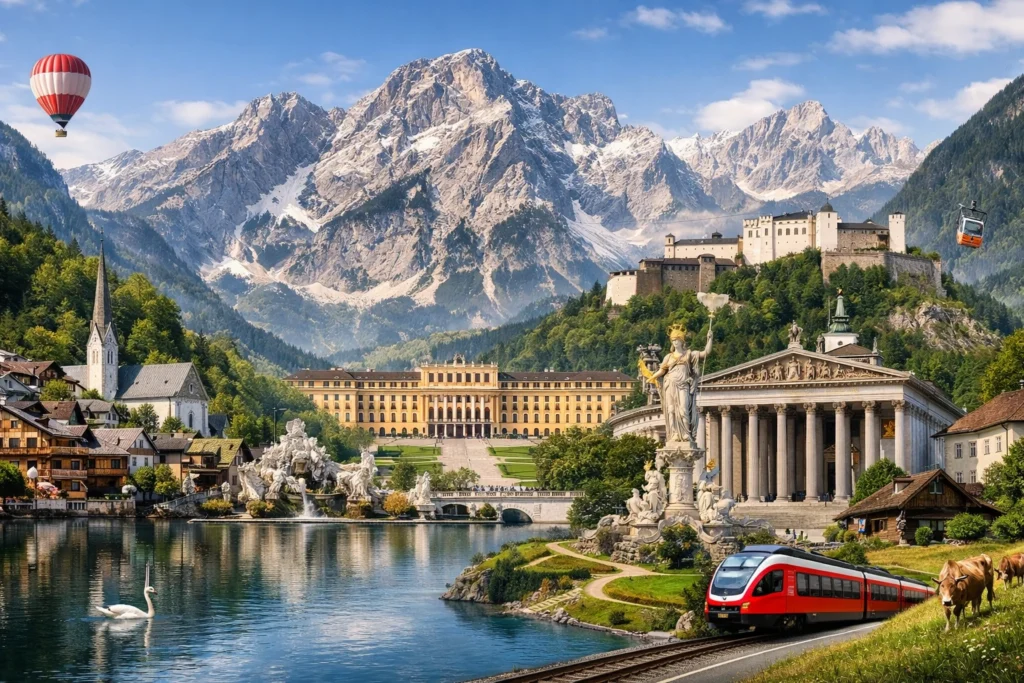
Austria is a country where snow-capped Alps meet elegant imperial cities, classical music echoes through historic halls, and charming villages preserve centuries-old traditions. Located in the heart of Europe, Austria is a dream destination for travelers who love scenic landscapes, cultural depth, and well-organized travel experiences. From Vienna’s royal palaces to the alpine lakes of Salzkammergut and the dramatic peaks of Tyrol, Austria offers a balanced mix of history, nature, and modern lifestyle that makes it one of Europe’s most rewarding countries to explore.
Austria is where fairy-tale landscapes meet imperial elegance. From the grand palaces of Vienna to the musical charm of Salzburg and the alpine adventures of Innsbruck, this European gem offers an unforgettable travel experience.
Whether you’re a culture enthusiast, nature lover, or adventure seeker, this Austria Travel Guide will help you explore the country like never before.
This Austria travel guide is designed to help you plan a meaningful and practical trip, whether you are visiting for a short city break or a longer slow-travel journey through the Alps.
AI Travel Planner
Overview of Austria
Austria is a landlocked country in Central Europe, bordered by Germany, Switzerland, Italy, Hungary, and several Eastern European nations. The country is dominated by the Eastern Alps, which shape its landscapes, climate, and outdoor culture.
For travelers, Austria is important because it combines natural beauty with cultural richness in a compact and efficient travel network. Trains are punctual, cities are walkable, and even remote alpine villages are well connected.
Vienna, the capital city, is the main gateway to Austria and one of Europe’s most livable cities. Most international travelers arrive through Vienna International Airport, while others enter via Munich, Salzburg, or Zurich.
Why Visit Austria
Austria stands out as one of Europe’s most enchanting destinations.
Top reasons to visit:
- Stunning Alpine scenery
- Rich musical heritage (home of Wolfgang Amadeus Mozart)
- Historic palaces and architecture
- Clean, safe, and well-connected cities
Major Cities and Regions in Austria
Vienna
Austria’s capital and cultural heart, Vienna is famous for imperial palaces, classical music, museums, and café culture.
Salzburg
Known as Mozart’s birthplace and the setting for The Sound of Music, Salzburg is a beautiful baroque city surrounded by mountains.
Innsbruck
Located in the Tyrol region, Innsbruck is a major alpine city popular for skiing, hiking, and mountain sports.
Graz
Austria’s second-largest city, Graz blends medieval old town charm with modern architecture and a relaxed student vibe.
Tyrol
A mountainous region known for alpine villages, winter sports, and dramatic scenery.
Salzkammergut
A lake district famous for crystal-clear lakes, charming towns like Hallstatt, and peaceful landscapes.
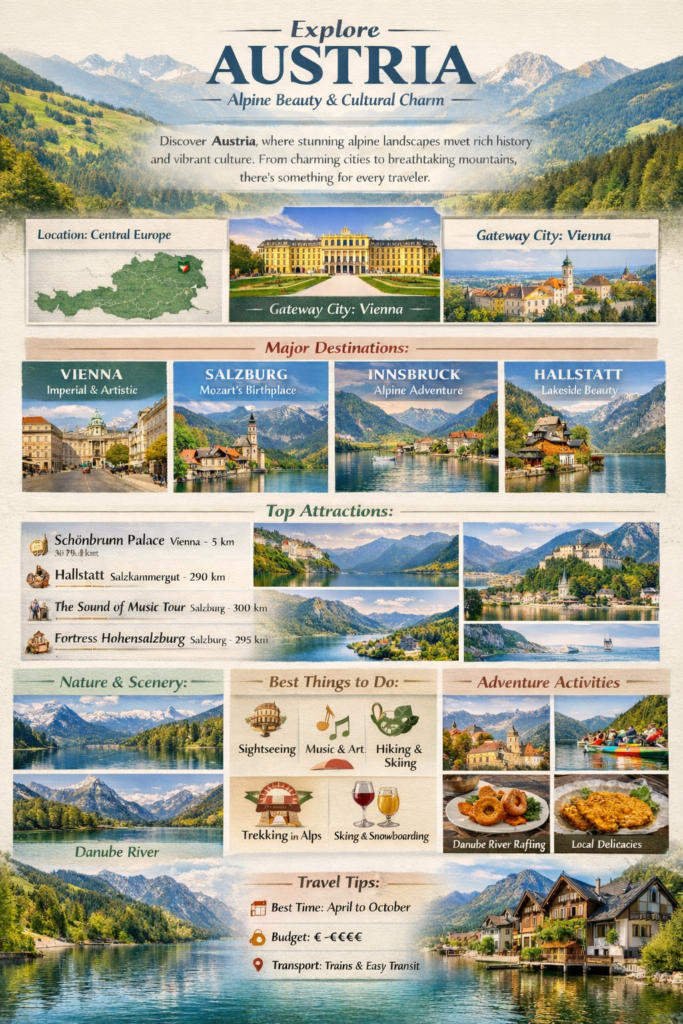
Famous Tourist Places in Austria
Schönbrunn Palace
City: Vienna
Distance from Vienna city center: 6 km
How to reach:
Metro (U4 line), tram, or taxi from central Vienna
Why it is famous:
Schönbrunn Palace was the summer residence of the Habsburg emperors and is one of Austria’s most visited attractions. The palace complex includes grand rooms, manicured gardens, fountains, and panoramic viewpoints. It offers deep insight into Austria’s imperial past and is a UNESCO World Heritage Site.
Hallstatt Village
Region: Salzkammergut
Distance from Vienna: approx. 290 km
How to reach:
Train from Vienna to Attnang-Puchheim, then to Hallstatt, followed by a ferry or short walk
Why it is famous:
Often described as one of the most beautiful villages in the world, Hallstatt sits beside a serene lake with alpine mountains rising behind it. The village is known for its pastel houses, salt mine history, and postcard-perfect scenery.
Salzburg Old Town
City: Salzburg
Distance from Vienna: approx. 300 km
How to reach:
Direct train from Vienna (around 2.5 hours)
Why it is famous:
Salzburg’s Old Town is a UNESCO World Heritage Site filled with baroque architecture, historic squares, and narrow streets. It is also closely associated with Mozart and classical music heritage.
Innsbruck Old Town and Nordkette
City: Innsbruck
Distance from Vienna: approx. 470 km
How to reach:
Train or flight from Vienna
Why it is famous:
Innsbruck is unique for combining a historic old town with direct access to alpine peaks. The Nordkette cable car takes visitors from the city center to high-altitude viewpoints within minutes.
Wachau Valley
Region: Lower Austria
Distance from Vienna: approx. 80 km
How to reach:
Train, bus, or day tour from Vienna
Why it is famous:
The Wachau Valley is known for vineyards, medieval towns, and scenic Danube river landscapes. It is perfect for wine tasting, cycling, and relaxed countryside exploration.
Landscapes and Natural Attractions
Austria’s landscapes are dominated by the Alps, covering nearly two-thirds of the country. These mountains shape Austria’s outdoor lifestyle and seasonal travel patterns.
The alpine regions offer snow-covered peaks in winter and lush green meadows in summer. Austria also has beautiful lakes such as Wolfgangsee, Hallstätter See, and Achensee, which are popular for swimming, boating, and lakeside walks.
Forests, river valleys, and rolling vineyards add variety to the scenery, especially in regions like Styria and Lower Austria. Seasonal beauty is strong in Austria, with snowy winters, colorful autumns, and flower-filled springs.
Best Things to Do in Austria
Sightseeing in imperial cities like Vienna and Salzburg
Exploring alpine villages and scenic mountain roads
Visiting museums, palaces, and classical concert halls
Enjoying lakeside walks and boat rides
Relaxing in traditional cafés and sampling local pastries
Taking scenic train journeys through the Alps
Austria is ideal for travelers who enjoy a slower pace, cultural immersion, and scenic exploration rather than rushed sightseeing.
Best Time to Visit
- Spring (April–June): Mild weather, blooming landscapes
- Summer (July–August): Ideal for sightseeing and hiking
- Autumn (September–October): Fewer crowds, scenic beauty
- Winter (November–March): Skiing and Christmas markets
Adventure and Outdoor Experiences
Trekking and hiking are popular in summer, especially in Tyrol and Salzkammergut. Trails range from beginner-friendly paths to challenging alpine routes.
Skiing and snowboarding dominate winter travel, with resorts like Kitzbühel, St. Anton, and Zell am See offering world-class facilities.
Paragliding is available in alpine regions like Innsbruck and Zell am See, usually during warmer months.
Cycling along the Danube or through wine regions is suitable for beginners and leisure travelers.
Best season for adventure activities is June to September for hiking and December to March for winter sports.
Culture, History, and Heritage
Austria’s culture is deeply influenced by its imperial history and artistic legacy. The Habsburg dynasty ruled much of Europe for centuries, leaving behind palaces, churches, and cultural institutions.
Classical music is central to Austrian identity, with composers like Mozart, Beethoven, and Strauss closely associated with the country. Opera houses and concert halls remain an important part of daily life.
Austria has several UNESCO World Heritage Sites, including Vienna’s historic center, Salzburg Old Town, Hallstatt, and Schönbrunn Palace.
Traditional clothing like lederhosen and dirndls, folk music, and seasonal festivals continue to thrive alongside modern European lifestyles.
Local Insights for Travelers
Austrians value punctuality and quiet public behavior. Keeping your voice low on public transport is appreciated.
Cash is still widely used, especially in small towns, so carry some euros even though cards are accepted in cities.
Local food is hearty and filling. Try dishes like Wiener Schnitzel, Tafelspitz, Kaiserschmarrn, and Apfelstrudel.
Sunday is generally quiet, with many shops closed, especially outside major cities. Plan shopping accordingly.
Avoid peak visiting hours in popular places like Hallstatt by arriving early morning or late afternoon.
Practical Travel Information
Best time to visit
April to June and September to October are ideal for sightseeing and mild weather. Winter is best for snow lovers and ski trips.
Ideal trip duration
7 to 10 days allows you to cover Vienna, Salzburg, and one alpine region comfortably.
Budget range
Budget travelers: €70–100 per day
Mid-range travelers: €120–180 per day
Luxury travelers: €250+ per day
Safety
Austria is one of the safest countries in Europe. Normal precautions are sufficient.
Connectivity and transport
Austria has excellent train connectivity. Public transport in cities is reliable and easy to use. English is widely spoken.
Sample 7-Day Austria Itinerary
Day 1: Arrive in Vienna, evening city walk
Day 2: Vienna sightseeing, Schönbrunn Palace, museums
Day 3: Day trip to Wachau Valley
Day 4: Train to Salzburg, explore Old Town
Day 5: Salzburg surroundings or Sound of Music locations
Day 6: Travel to Hallstatt or Innsbruck
Day 7: Alpine exploration and departure
Frequently Asked Questions
Is Austria safe for tourists?
Yes, Austria is very safe for solo travelers, families, and first-time visitors.
Is Austria expensive?
Austria is moderately expensive, but costs can be managed with public transport and budget accommodations.
Is Austria good for solo travelers?
Yes, it is excellent for solo travel due to safety, connectivity, and friendly infrastructure.
Do I need a visa for Austria?
Austria is part of the Schengen Area. Visa requirements depend on your nationality.
Can I travel Austria without a car?
Yes, trains and buses cover most destinations efficiently.
Conclusion
Austria is a destination that rewards travelers who value beauty, culture, and thoughtful travel experiences. Whether you are wandering through imperial streets, hiking alpine trails, or enjoying a quiet coffee beside a lake, Austria encourages you to slow down and connect with your surroundings. It is a country that blends tradition and modern comfort effortlessly, making every journey feel both enriching and relaxing.
For travelers seeking meaningful European travel beyond crowded tourist routes, Austria remains a timeless and deeply satisfying choice.