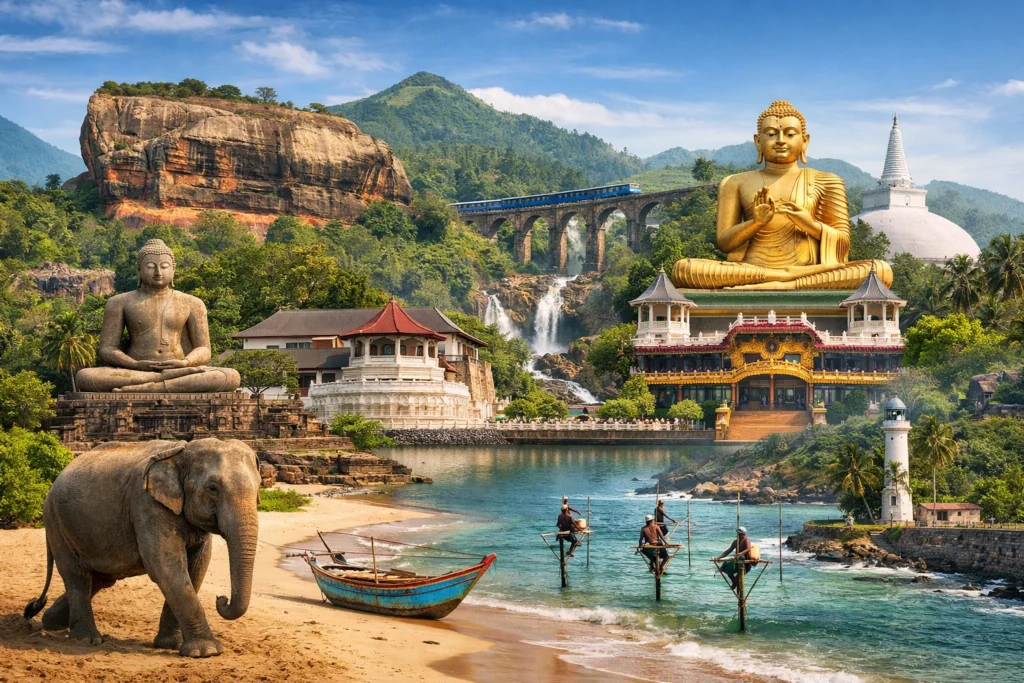
Sri Lanka may be small in size, but it offers a world of experiences. From golden beaches and lush tea plantations to ancient temples and wildlife safaris, this island nation is packed with diversity and charm.
This Sri Lanka Travel Guide will help you uncover the beauty, culture, and adventure that make Sri Lanka one of the most captivating destinations in Asia.
Why Visit Sri Lanka
Sri Lanka is often called the “Pearl of the Indian Ocean,” and for good reason. It combines history, nature, and culture in a way few destinations can.
Here’s why Sri Lanka stands out:
AI Travel Planner
- Beautiful beaches and coastal towns
- Rich cultural heritage and ancient ruins
- Scenic hill country and tea plantations
- National parks with diverse wildlife
- Warm hospitality and flavorful cuisine
It’s perfect for both relaxation and exploration.
Best Time to Visit Sri Lanka
Sri Lanka has two monsoon seasons, so the best time depends on the region you plan to visit.
- December to April: Ideal for the west and south coasts
- May to September: Best for the east coast
This makes Sri Lanka a year-round destination if planned wisely.
Top Places to Visit in Sri Lanka
Colombo
The bustling capital, Colombo, offers a mix of modern life, colonial architecture, and vibrant markets.
Sigiriya
A UNESCO World Heritage Site, Sigiriya is an ancient rock fortress with breathtaking views and fascinating history.
Kandy
A cultural hub, Kandy is home to the sacred Temple of the Tooth.
Ella
Nestled in the hills, Ella is known for tea plantations, waterfalls, and scenic train rides.
Yala National Park
A must-visit for wildlife lovers, Yala National Park is famous for leopards, elephants, and diverse ecosystems.
Galle
A charming coastal city, Galle features the historic Galle Fort.
Overview of Sri Lanka
Sri Lanka is an island country located south of India in the Indian Ocean. Despite its compact size, Sri Lanka is remarkably diverse in geography, culture, and climate. The country features tropical beaches, rolling hills, dense rainforests, dry-zone plains, and fertile tea-growing highlands.
Sri Lanka is important for travelers because it offers cultural depth, affordability, friendly locals, and excellent travel variety. Colombo, the commercial capital, is the main international gateway through Bandaranaike International Airport, while Sri Jayawardenepura Kotte serves as the administrative capital.
Major Cities and Regions in Sri Lanka
Colombo
The commercial capital and main entry point, Colombo blends colonial buildings, modern cafes, temples, and coastal walks.
Kandy
A cultural and spiritual hub in the central highlands, Kandy is home to the Temple of the Sacred Tooth Relic.
Galle
A historic coastal city famous for its Dutch Fort, colonial architecture, and relaxed seaside atmosphere.
Nuwara Eliya
Known as “Little England,” this hill town is surrounded by tea plantations and cool-climate landscapes.
Sigiriya and Cultural Triangle
This region includes ancient cities like Sigiriya, Polonnaruwa, and Anuradhapura, showcasing Sri Lanka’s early civilizations.
Famous Tourist Places in Sri Lanka
Sigiriya Rock Fortress
Region: Cultural Triangle
Distance from Colombo: Around 170 km
How to reach: Road or train to nearby towns, then local transport
Why visit: A UNESCO World Heritage Site, Sigiriya is an ancient rock fortress with frescoes, gardens, and panoramic views from the summit.
Temple of the Sacred Tooth Relic
City: Kandy
Distance from Colombo: Around 115 km
How to reach: Train or road
Why visit: One of the most sacred Buddhist sites in the world, believed to house a tooth relic of Lord Buddha.
Galle Fort
City: Galle
Distance from Colombo: Around 125 km
How to reach: Train or road along the coast
Why visit: A beautifully preserved colonial fort with cobblestone streets, cafes, museums, and ocean views.
Ella
Region: Hill Country
Distance from Colombo: Around 200 km
How to reach: Scenic train journey via Kandy or road
Why visit: Known for lush green hills, waterfalls, hiking trails, and relaxed backpacker vibes.
Yala National Park
Region: Southern Sri Lanka
Distance from Colombo: Around 300 km
How to reach: Road
Why visit: Famous for wildlife safaris, especially leopards, elephants, crocodiles, and diverse birdlife.
Landscapes and Natural Attractions
Sri Lanka’s landscapes are incredibly varied for its size. The central highlands offer rolling tea plantations, waterfalls, and mist-covered hills. The southern and eastern coasts are lined with golden beaches, coral reefs, and fishing villages. Dense rainforests and national parks shelter wildlife, while dry-zone plains hold ancient ruins and reservoirs.
Seasonal changes influence travel experiences. The southwest monsoon affects the west and south coasts, while the northeast monsoon impacts the east coast, making Sri Lanka a year-round destination if planned wisely.
Best Things to Do in Sri Lanka
Explore ancient ruins and temples in the Cultural Triangle.
Take one of the world’s most scenic train rides from Kandy to Ella.
Relax on beaches like Mirissa, Unawatuna, or Arugam Bay.
Go wildlife spotting on safaris in Yala, Udawalawe, or Minneriya.
Visit tea estates and factories in Nuwara Eliya or Ella.
Adventure and Experiences
Hiking and Trekking
Hike Little Adam’s Peak, Ella Rock, or Knuckles Mountain Range. Best seasons are December to April for most regions.
Surfing
Arugam Bay is a world-famous surf destination, while Mirissa and Weligama are great for beginners. Best season depends on coast.
Scuba Diving and Snorkeling
Explore coral reefs around Hikkaduwa, Trincomalee, and Pigeon Island. Visibility is best during dry seasons.
Wildlife Safaris
Jeep safaris offer close encounters with elephants, leopards, sloth bears, and exotic birds.
Whale Watching
Mirissa and Trincomalee are popular for spotting blue whales and dolphins during the right season.
Culture, History, and Heritage
Sri Lanka’s culture is shaped by Buddhism, Hinduism, Islam, and Christianity, reflected in its temples, festivals, and daily life. The island has a recorded history spanning over 2,500 years, with ancient kingdoms leaving behind stupas, monasteries, irrigation systems, and sculptures.
Sri Lanka is home to several UNESCO World Heritage Sites, including Sigiriya, Anuradhapura, Polonnaruwa, Kandy, Galle Fort, Sinharaja Forest Reserve, and the Central Highlands.
Traditional dance forms, drumming, handicrafts, and Ayurvedic practices remain deeply rooted in Sri Lankan culture.
Local Insights for Travelers
Sri Lankans are warm and hospitable, and simple politeness goes a long way.
Dress modestly when visiting temples and remove shoes before entering.
Rice and curry is a daily staple, with flavors varying by region.
Travel times can be longer than expected due to winding roads, so plan lightly.
Train travel is slow but incredibly scenic and worth the time.
Practical Travel Information
Best time to visit
Sri Lanka can be visited year-round. December to April is ideal for the west and south coasts, while May to September is best for the east coast.
Ideal trip duration
10 to 14 days allows a comfortable mix of culture, nature, and beaches.
Budget range
Budget travelers: Guesthouses, local transport, street food
Mid-range travelers: Boutique hotels, private drivers, guided tours
Luxury travelers: Heritage hotels, beach resorts, private safaris
Safety tips
Sri Lanka is generally safe for travelers. Follow local advice, avoid isolated areas late at night, and respect cultural norms.
Connectivity and transport
Mobile data is affordable and reliable. Transport options include trains, buses, tuk-tuks, and private cars.
Sample 5-Day Sri Lanka Itinerary
Day 1: Arrive in Colombo, explore city highlights
Day 2: Travel to Kandy, visit Temple of the Tooth Relic
Day 3: Scenic train to Ella, explore viewpoints and waterfalls
Day 4: Travel to Yala, wildlife safari experience
Day 5: Relax on southern beaches like Mirissa or Unawatuna
Frequently Asked Questions
Is Sri Lanka safe for tourists?
Yes, Sri Lanka is considered safe, especially in tourist regions.
Is Sri Lanka good for solo travelers?
Yes, it is friendly, affordable, and popular among solo travelers.
What is the best month to visit Sri Lanka?
January to March is ideal for most regions, depending on coast.
Is Sri Lanka budget-friendly?
Very much so, offering excellent value for money.
Do I need a visa for Sri Lanka?
Most travelers require an electronic travel authorization before arrival.
Internal Linking Suggestions for TravelBloomy
Link Sri Lanka travel guides to Colombo city travel guide
Connect hill country travel articles with India and Nepal mountain destinations
Link Sri Lanka beach guides with Maldives and Thailand travel content
Connect cultural heritage posts with Southeast Asia travel guides
Conclusion
Sri Lanka is a destination that rewards curiosity and patience. It invites you to slow down, travel mindfully, and experience life beyond tourist checklists. From ancient stone cities and misty tea hills to wild jungles and sunlit beaches, Sri Lanka offers a journey that feels both grounding and inspiring. Travel gently, connect with local rhythms, and let this island reveal its many layers at its own pace.