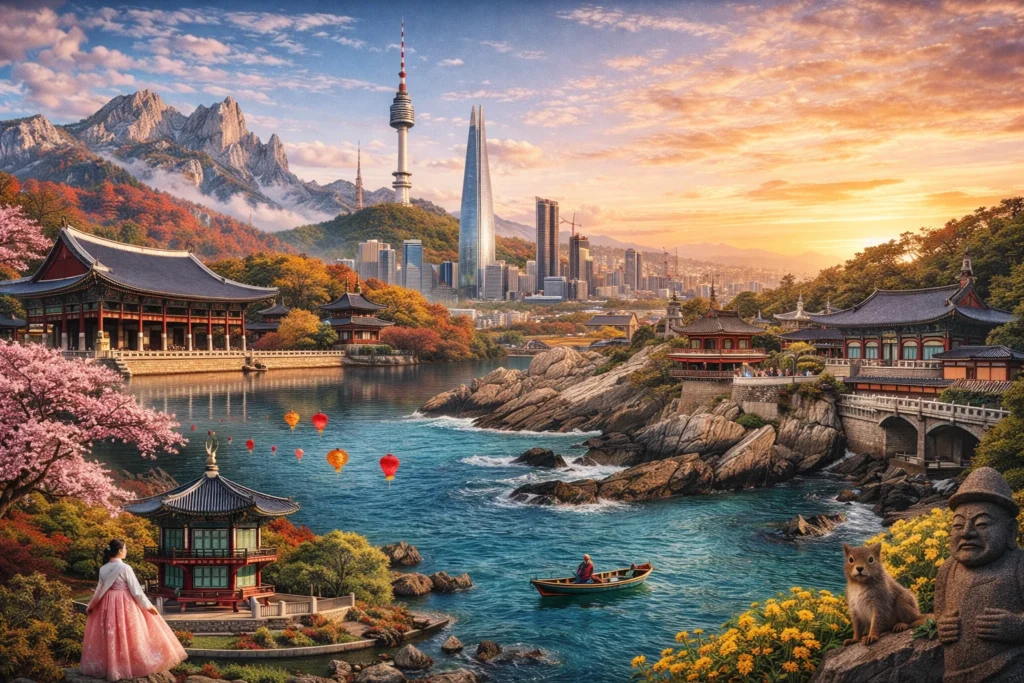
South Korea is a country where centuries-old palaces stand beside futuristic skyscrapers, where traditional markets coexist with high-tech shopping districts, and where culture blends seamlessly with innovation.
This South Korea Travel Guide will help you explore a destination that offers everything—from historic temples and scenic mountains to K-pop culture and vibrant city life.
Why Visit South Korea
South Korea is one of Asia’s most dynamic travel destinations, offering a perfect mix of tradition and modernity.
What makes South Korea unique:
AI Travel Planner
- Rich cultural heritage and historic landmarks
- Cutting-edge technology and modern cities
- Delicious and diverse cuisine
- Scenic landscapes and national parks
- Global influence of K-pop and Korean entertainment
It’s ideal for culture lovers, foodies, and urban explorers.
Best Time to Visit South Korea
South Korea is beautiful in every season.
Spring (March to May) brings cherry blossoms, while autumn (September to November) offers colorful foliage. Summer can be hot and humid, and winter is cold but great for snow lovers.
Top Places to Visit in South Korea
Seoul
The heart of the country, Seoul is a vibrant metropolis where tradition meets innovation. Must-visit attractions include:
- Gyeongbokgung Palace
- Bukchon Hanok Village
- N Seoul Tower
Busan
A coastal gem, Busan is famous for beaches, seafood, and vibrant culture.
Jeju Island
Known as the “Hawaii of Korea,” Jeju Island offers volcanic landscapes, waterfalls, and beaches.
Gyeongju
Often called a “museum without walls,” Gyeongju is filled with ancient temples and historical sites.
Incheon
A modern city near Seoul, Incheon is known for its international airport and futuristic developments.
Unique Experiences in South Korea
South Korea offers unforgettable cultural and modern experiences:
Visiting historical treasures in Gyeongju
Wearing traditional hanbok at Gyeongbokgung Palace
Exploring K-pop culture in Seoul
Relaxing on beaches in Busan
Hiking volcanic landscapes on Jeju Island
Overview of South Korea
South Korea is located in East Asia, occupying the southern part of the Korean Peninsula. It is bordered by North Korea to the north, the Yellow Sea to the west, and the Sea of Japan (East Sea) to the east. Despite its compact size, South Korea is incredibly diverse in landscapes, culture, and experiences.
For travelers, South Korea is known for being safe, efficient, and visitor-friendly. The main gateway city is Seoul, the capital and largest city, which handles most international arrivals through Incheon International Airport, one of the best airports in the world.
Major Cities and Regions in South Korea
Seoul
The heart of South Korea, Seoul blends royal palaces, traditional neighborhoods, skyscrapers, shopping districts, and cutting-edge technology.
Busan
South Korea’s largest port city, Busan is famous for beaches, seafood, coastal views, and a relaxed urban vibe.
Jeju Island
A volcanic island known for natural beauty, waterfalls, lava tubes, beaches, and slower island life.
Gyeongju
Often called an open-air museum, Gyeongju is the ancient capital of the Silla Kingdom and a center of Korean history.
Incheon
A modern coastal city near Seoul, known for international access, smart city planning, and cultural districts.
Famous Tourist Places in South Korea
Gyeongbokgung Palace
City: Seoul
Distance from Incheon International Airport: Around 50 km
How to reach: Airport train or subway to central Seoul
Why it is famous: The largest and most iconic royal palace of the Joseon Dynasty, offering a deep look into Korea’s royal history and architecture.
Bukchon Hanok Village
City: Seoul
Distance from Incheon International Airport: Around 55 km
How to reach: Subway or taxi
Why it is famous: A preserved traditional village with hundreds of hanok houses, giving insight into old Korean lifestyle within a modern city.
Haeundae Beach
City: Busan
Distance from Seoul: Around 325 km
How to reach: High-speed KTX train, flight, or bus
Why it is famous: South Korea’s most famous beach, known for festivals, sunrise views, and coastal city life.
Gamcheon Culture Village
City: Busan
Distance from Busan city center: Around 6 km
How to reach: Local bus or taxi
Why it is famous: A colorful hillside village with art installations, narrow alleys, and panoramic views.
Seongsan Ilchulbong (Sunrise Peak)
Region: Jeju Island
Distance from Jeju City: Around 50 km
How to reach: Local bus or taxi
Why it is famous: A volcanic crater rising from the sea, famous for sunrise views and geological significance.
Bulguksa Temple
City: Gyeongju
Distance from Busan: Around 80 km
How to reach: Train or bus to Gyeongju, then local transport
Why it is famous: A UNESCO World Heritage Site representing the peak of Buddhist art during the Silla period.
Landscapes and Natural Attractions
South Korea’s landscapes are calm and scenic rather than extreme. Forested mountains cover much of the country, making hiking accessible even from major cities. National parks like Seoraksan and Jirisan offer waterfalls, rocky peaks, and autumn foliage that attracts visitors from across Asia.
The coastline stretches for thousands of kilometers, with sandy beaches, fishing villages, cliffs, and islands. Jeju Island stands out for its volcanic terrain, lava caves, waterfalls, and dramatic coastal scenery.
Seasonal changes strongly influence travel experiences. Spring brings cherry blossoms, summer offers beach life, autumn delivers colorful foliage, and winter transforms the country into a snowy, cozy destination.
Best Things to Do in South Korea
Explore royal palaces and traditional neighborhoods in Seoul.
Experience Korean street food, barbecue, and local markets.
Relax at beaches and seafood markets in Busan.
Visit Jeju Island for nature, waterfalls, and island culture.
Try traditional Korean spas known as jjimjilbangs.
Enjoy café culture, shopping streets, and modern design spaces.
Adventure and Experiences
Hiking and Trekking
South Korea is a hiking paradise. Trails in Seoraksan, Bukhansan, and Hallasan are well-marked and suitable for beginners to experienced hikers. Autumn and spring are the best seasons.
Scuba Diving and Snorkeling
Jeju Island offers diving spots with volcanic underwater formations. Best during summer months.
Skiing and Snow Activities
Gangwon Province has excellent ski resorts like Yongpyong and Alpensia. Winter season runs from December to February.
Temple Stay Programs
Many Buddhist temples offer overnight stays where travelers can experience meditation, monastic meals, and quiet mountain life.
Cycling
Dedicated cycling paths, including the famous Seoul to Busan route, allow long-distance cycling across the country.
Culture, History, and Heritage
South Korean culture is deeply rooted in Confucian values, respect, and community life, while also embracing modern global trends. Traditional customs coexist naturally with advanced technology and fast-paced urban living.
The country has several UNESCO World Heritage Sites, including Bulguksa Temple, Seokguram Grotto, Jongmyo Shrine, Changdeokgung Palace, and the historic areas of Gyeongju.
Traditional arts include hanbok clothing, calligraphy, tea ceremonies, pansori music, and mask dances. Modern Korean culture, especially K-pop, K-dramas, and cinema, has made South Korea a global cultural influencer.
Local Insights for Travelers
Public transport is extremely efficient, clean, and punctual.
Cashless payments are common, but small cash helps in markets.
Respect elders and follow basic etiquette in temples and homes.
Try local meals beyond restaurants, especially in markets and small eateries.
Convenience stores offer high-quality food and are part of daily life.
Practical Travel Information
Best time to visit
Spring (April to May) and autumn (September to October) are the best seasons. Cherry blossom season and autumn foliage are especially popular.
Ideal trip duration
7 to 10 days is ideal for exploring Seoul, Busan, and one additional region like Jeju or Gyeongju.
Budget range
Budget travelers: Guesthouses, public transport, street food
Mid-range travelers: Business hotels, KTX trains, guided tours
Luxury travelers: Boutique hotels, premium shopping, private experiences
Safety tips
South Korea is one of the safest countries for travelers. Follow basic precautions, especially in crowded areas.
Connectivity and transport
High-speed internet is available everywhere. SIM cards and portable Wi-Fi are easy to rent. Trains, subways, and buses cover the entire country.
Sample 5-Day South Korea Itinerary
Day 1: Arrive in Seoul, explore Myeongdong and local markets
Day 2: Visit Gyeongbokgung Palace, Bukchon Hanok Village, and Insadong
Day 3: Travel to Busan, explore beaches and seafood markets
Day 4: Visit Gamcheon Culture Village and coastal areas
Day 5: Return to Seoul or extend trip to Jeju Island or Gyeongju
Frequently Asked Questions
Is South Korea safe for tourists?
Yes, it is one of the safest travel destinations in Asia.
Is South Korea good for solo travelers?
Absolutely. It is safe, organized, and easy to navigate alone.
What is the best month to visit South Korea?
April and October are considered the best months.
Is South Korea expensive?
Costs are moderate. Food and transport are affordable, while accommodation varies by city.
Do I need a visa for South Korea?
Many nationalities have visa-free or K-ETA entry. Check current rules before travel.
Internal Linking Suggestions for TravelBloomy
Link South Korea travel guides to Seoul city travel guide
Connect Busan articles with Japan and coastal Asia destinations
Link Jeju Island guides with other island destinations like Bali and Phuket
Connect South Korea cultural travel with Japan and China travel content
Conclusion
South Korea is a destination that rewards curiosity. It invites you to slow down in temples, walk mountain trails, eat thoughtfully prepared food, and experience a society where tradition and innovation exist side by side. Whether you are drawn by culture, nature, food, or modern life, South Korea offers a journey that feels balanced, enriching, and surprisingly soulful. Travel patiently, explore deeply, and let South Korea reveal its quiet magic over time.