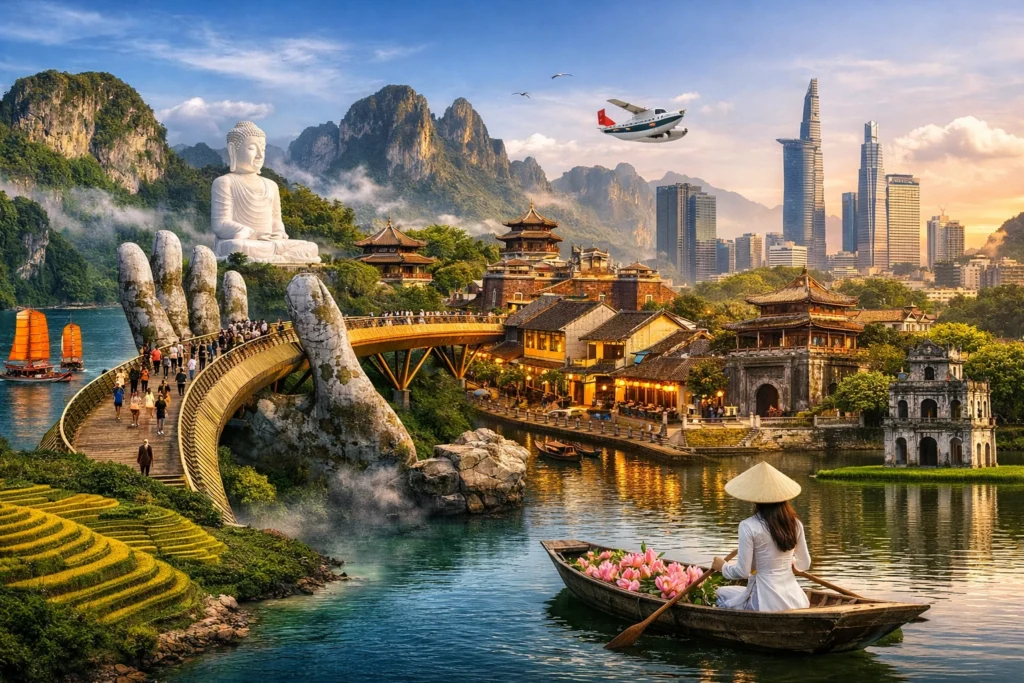
Vietnam is one of Southeast Asia’s most rewarding travel destinations, offering a rare balance of dramatic landscapes, deep-rooted culture, vibrant cities, and soulful rural life. From misty mountains and emerald rice terraces to lantern-lit towns and buzzing street markets, Vietnam invites travelers to slow down and experience life with curiosity and respect. This Vietnam travel guide is designed to help you understand the country beyond postcards, plan a meaningful trip, and explore both iconic highlights and lesser-known local experiences.
Located along the eastern edge of the Indochinese Peninsula, Vietnam stretches over 1,600 kilometers from north to south. This long geography creates incredible diversity in climate, cuisine, landscapes, and culture, making Vietnam suitable for both short trips and long, immersive journeys.
Overview of Vietnam
Vietnam lies in Southeast Asia, bordered by China to the north, Laos and Cambodia to the west, and the South China Sea to the east. Its S-shaped coastline is dotted with beaches, fishing villages, and historic ports. Vietnam’s strategic location and long history have shaped it into a country rich in traditions, resilience, and artistic expression.
For travelers, Vietnam is important because it offers affordability, safety, rich history, and a wide variety of experiences within one country. Whether you are interested in food, history, nature, adventure, or spiritual travel, Vietnam delivers consistently.
AI Travel Planner
The main international gateway to Vietnam is Hanoi in the north and Ho Chi Minh City in the south. Da Nang also serves as a popular entry point for central Vietnam.
Major Cities and Regions
Hanoi
The capital city of Vietnam blends ancient temples, colonial architecture, lakes, and lively street life. It is the cultural and political heart of the country.
Ho Chi Minh City
Formerly Saigon, this is Vietnam’s largest city and economic hub, known for its energy, nightlife, museums, and modern skyline.
Da Nang
A coastal city in central Vietnam, Da Nang is known for beaches, bridges, and its proximity to historic towns and mountains.
Hoi An
A beautifully preserved ancient town famous for lanterns, traditional houses, and riverside charm.
Hue
The former imperial capital of Vietnam, rich in royal history, citadels, and tombs.
Sapa
A mountain region in northern Vietnam famous for rice terraces, trekking, and ethnic minority villages.
Mekong Delta
A fertile river region in southern Vietnam known for floating markets, canals, and rural life.
Famous Tourist Places in Vietnam
Ha Long Bay
Location: Quang Ninh Province
Distance from Hanoi: Approx. 165 km
How to reach: Road trip from Hanoi or guided tours; nearest airport is Van Don
Why it is famous: Ha Long Bay is a UNESCO World Heritage Site known for thousands of limestone karsts rising from emerald waters. Cruises through the bay, kayaking, and overnight stays offer a peaceful and surreal experience.
Hoi An Ancient Town
Location: Quang Nam Province
Distance from Da Nang: Approx. 30 km
How to reach: Fly to Da Nang, then taxi or bus
Why it is famous: Hoi An is known for its lantern-lit streets, preserved architecture, tailor shops, and riverside cafes. It feels timeless and romantic, especially in the evenings.
Cu Chi Tunnels
Location: Near Ho Chi Minh City
Distance from Ho Chi Minh City: Approx. 70 km
How to reach: Half-day tours or road travel
Why it is famous: These underground tunnels played a major role during the Vietnam War and offer insight into the country’s history and resilience.
Phong Nha-Ke Bang National Park
Location: Central Vietnam
Distance from Da Nang: Approx. 270 km
How to reach: Train or bus to Dong Hoi, then local transport
Why it is famous: Home to some of the world’s largest caves, this national park is a paradise for nature lovers and adventure seekers.
Sapa Rice Terraces
Location: Lao Cai Province
Distance from Hanoi: Approx. 320 km
How to reach: Overnight train or bus from Hanoi
Why it is famous: Sapa offers stunning mountain views, terraced rice fields, and cultural interactions with local ethnic communities.
Landscapes and Natural Attractions
Vietnam’s landscapes change dramatically from north to south. In the north, you will find misty mountains, valleys, and terraced farms. Central Vietnam offers coastal plains, caves, and tropical forests. The south is dominated by rivers, wetlands, and fertile farmland.
The country experiences seasonal beauty, with spring flowers in the north, lush green summers in central regions, and golden harvests in rural areas. Beaches along Da Nang, Nha Trang, and Phu Quoc offer warm waters and relaxed coastal life.
Best Things to Do in Vietnam
Explore historic old quarters and ancient towns
Taste street food like pho, banh mi, and fresh spring rolls
Take a cruise in Ha Long Bay or Lan Ha Bay
Ride a motorbike through countryside roads
Visit temples, pagodas, and spiritual sites
Relax in cafes and observe everyday local life
Vietnam rewards travelers who slow down and observe rather than rush.
Adventure and Experiences
Trekking in Sapa and Ha Giang is best from September to November and March to May, suitable for moderate fitness levels.
Caving in Phong Nha is ideal for adventure lovers, with guided tours available for beginners and experienced explorers.
Kayaking in Ha Long Bay is suitable year-round, especially during calm seasons.
Motorbike journeys along the Hai Van Pass offer scenic coastal views and are suitable for confident riders.
Beach activities like snorkeling and diving are popular in Phu Quoc and Nha Trang, best between November and April.
Culture, History, and Heritage
Vietnamese culture is deeply influenced by Confucianism, Buddhism, and Taoism. Family values, respect for elders, and community life are central to daily living.
The country’s history includes ancient dynasties, colonial periods, and modern struggles that shaped its identity. Sites like Hue’s Imperial City and My Son Sanctuary reflect Vietnam’s historical depth.
Traditional art forms include water puppet shows, silk weaving, and folk music. Festivals such as Tet (Vietnamese New Year) showcase traditions, food, and family gatherings.
Local Insights You Should Know
Vietnamese people value politeness and humility. A smile goes a long way, even when language barriers exist.
Street food is best enjoyed at busy stalls where locals eat. Freshness matters more than appearance.
Crossing the road in cities can feel chaotic. Walk slowly and confidently; traffic usually flows around you.
Dress modestly when visiting temples and rural areas.
Try early morning markets to experience authentic daily life beyond tourist schedules.
Practical Travel Information
Best time to visit:
March to April and September to November offer balanced weather across regions.
Ideal trip duration:
10 to 14 days allows exploration of north, central, and south Vietnam.
Budget range:
Vietnam is budget-friendly.
Budget travelers: Affordable hostels, street food, public transport
Mid-range travelers: Comfortable hotels, guided tours
Luxury travelers: Boutique resorts, cruises, and private experiences
Safety:
Vietnam is considered safe for travelers. Petty theft can occur in crowded areas, so basic awareness is advised.
Connectivity and transport:
Local SIM cards are affordable and reliable. Trains, buses, and domestic flights connect major regions efficiently.
Sample 7-Day Vietnam Itinerary
Day 1: Arrive in Hanoi, explore Old Quarter and Hoan Kiem Lake
Day 2: Hanoi city tour and cultural sites
Day 3: Travel to Ha Long Bay, overnight cruise
Day 4: Return to Hanoi, evening flight to Da Nang
Day 5: Explore Hoi An Ancient Town
Day 6: Fly to Ho Chi Minh City, city highlights
Day 7: Visit Cu Chi Tunnels and depart
This itinerary can be extended for Sapa or Mekong Delta experiences.
Frequently Asked Questions About Vietnam
Is Vietnam safe for tourists?
Yes, Vietnam is generally safe with common travel precautions.
Is Vietnam good for solo travelers?
Vietnam is excellent for solo travelers due to safety, affordability, and friendly locals.
What is the best month to visit Vietnam?
March and April are ideal for balanced weather.
Is Vietnam budget-friendly?
Yes, Vietnam offers great value for accommodation, food, and transport.
Do I need a visa for Vietnam?
Visa requirements depend on nationality; many travelers can apply online.
Can I travel Vietnam without knowing Vietnamese?
Yes, English is commonly spoken in tourist areas.
Conclusion
Vietnam is not just a destination, but a journey through layers of history, landscapes, and everyday moments. It rewards travelers who move slowly, eat locally, listen deeply, and respect traditions. Whether you are watching lanterns float on a river, sharing tea in a mountain village, or riding through green countryside roads, Vietnam stays with you long after the journey ends. It is a country best experienced with openness, patience, and curiosity, making every trip feel personal and meaningful.