Namibia Travel Guide – A Journey Through Africa’s Wildest Landscapes
Introduction
Namibia travel guide begins with a sense of raw, untouched beauty where vast deserts, dramatic landscapes, and incredible wildlife create one of Africa’s most unique travel experiences. Located in southwestern Africa, Namibia offers a journey that feels both adventurous and deeply peaceful. This Namibia travel guide is designed to help you plan a structured and realistic trip while experiencing the country’s wild landscapes and cultural depth.
Overview of the Country
Namibia travel guide introduces a country bordered by the Atlantic Ocean, known for its deserts, national parks, and low population density. The capital city, Windhoek, serves as the main gateway for international travelers. Namibia travel guide highlights that the country is ideal for road trips, wildlife safaris, photography, and adventure travel, making it suitable for both luxury safari seekers and independent explorers.
Major Cities / Regions
Namibia travel guide explains the key regions that define the country
Windhoek is the central hub for arrivals, culture, and planning the journey
AI Travel Planner
Swakopmund is a coastal town known for adventure sports and German colonial charm
Etosha National Park is the heart of wildlife safaris, ideal for nature and wildlife lovers
Sossusvlei is famous for its towering red sand dunes and desert photography
Damaraland offers rugged landscapes and cultural experiences with local communities
Famous Tourist Places
Namibia travel guide includes iconic attractions with practical insights
Sossusvlei
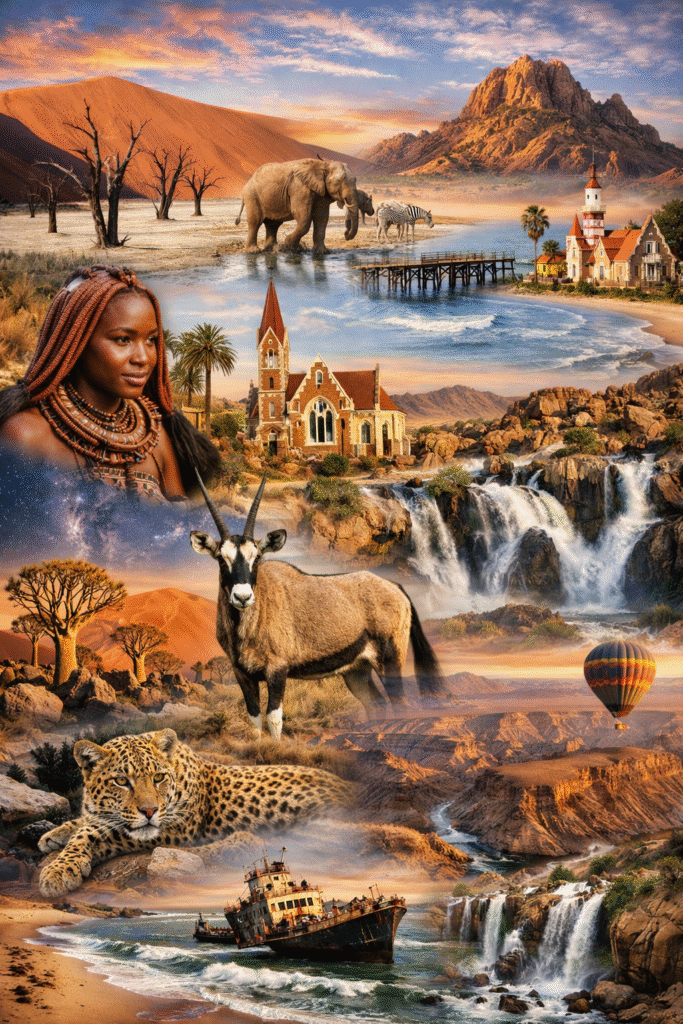
Located around 350 km from Windhoek, Sossusvlei is famous for its massive red dunes and surreal desert scenery. Accessible by road, the best time to visit is early morning. Namibia travel guide recommends sunrise photography for the best views.
Etosha National Park
Situated approximately 400 km from Windhoek, this park is known for its salt pan and abundant wildlife including elephants, lions, and rhinos. Reachable by road or small aircraft, Namibia travel guide suggests self-drive safaris for flexibility.
Deadvlei
Close to Sossusvlei, around 360 km from Windhoek, this location features ancient dead trees set against white clay and orange dunes. Namibia travel guide highlights it as a must-visit for photographers.
Skeleton Coast
Located in the northwest, over 500 km from Windhoek, this rugged coastline is known for shipwrecks and dramatic scenery. Namibia travel guide suggests guided tours due to its remoteness.
Landscapes & Natural Attractions
Namibia travel guide showcases one of the most diverse landscapes in Africa, including the Namib Desert, coastal regions, rocky mountains, and savannahs. The country is known for its vast open spaces, minimal crowds, and unique geological formations. Namibia travel guide emphasizes that the changing landscapes make it perfect for road trips and exploration.
Best Things to Do
Namibia travel guide focuses on experiences such as desert exploration, wildlife safaris, scenic drives, and cultural interactions. Travelers can watch wildlife at waterholes, explore dunes, visit coastal towns, and experience local traditions. Namibia travel guide encourages slow travel to truly absorb the environment.
Adventure & Experiences
Namibia travel guide includes thrilling activities
Sandboarding in Swakopmund is beginner-friendly and exciting
Hot air balloon rides over Sossusvlei offer a unique aerial view
Safari drives in Etosha are suitable for all experience levels
Quad biking in the desert is popular among adventure seekers
Namibia travel guide ensures that activities are safe and guided where necessary
Culture, History & Heritage
Namibia travel guide explores a mix of indigenous cultures and colonial history. The country is home to communities like Himba and Herero, each with distinct traditions. German colonial influence is visible in architecture, especially in Swakopmund. Namibia travel guide highlights cultural interactions as a meaningful part of the journey.
Local Insights
Namibia travel guide provides useful tips
Driving is the best way to explore, but distances are long
Fuel stations can be far apart, so plan ahead
Respect wildlife and maintain safe distances
Local cuisine includes game meat and traditional dishes
Namibia travel guide suggests carrying essentials due to remote travel conditions
Practical Travel Information
Namibia travel guide helps with planning essentials
Best time to visit is May to October for wildlife viewing
Ideal trip duration is 7 to 10 days
Budget travelers may spend $80–$120 per day
Mid-range travelers spend $150–$250 per day
Luxury safari travel can exceed $400 per day
Namibia travel guide ensures travelers choose based on comfort and travel style
Estimated Trip Cost from India
Namibia travel guide provides a cost breakdown for a 7–10 day trip
Flights: $700–$1200
Stay: $60–$350 per night
Food: $20–$60 per day
Transport: $30–$80 per day
Activities: $150–$400 total
Visa: Visa on arrival or e-visa (~$50–$100)
Insurance: $40–$80
Budget trip: $1200–$1800
Mid-range trip: $2200–$3500
Luxury trip: $4000+
Namibia travel guide helps travelers plan efficiently and avoid unexpected expenses
Sample 7-Day Itinerary
Namibia travel guide suggests a well-paced itinerary
Day 1: Arrival in Windhoek and rest
Day 2: Drive to Sossusvlei and explore dunes
Day 3: Visit Deadvlei and desert landscapes
Day 4: Travel to Swakopmund and relax
Day 5: Adventure activities in Swakopmund
Day 6: Travel to Etosha National Park and safari
Day 7: Safari and return journey
Namibia travel guide promotes a balanced mix of adventure and relaxation
FAQs
Is Namibia safe for travelers
Yes, it is considered safe with proper precautions
What is the best time to visit Namibia
May to October is best for wildlife and weather
Is Namibia good for solo travelers
Yes, especially for experienced travelers
Is Namibia expensive
It offers options from budget to luxury safari experiences
How many days are enough
7 to 10 days are ideal
Do Indians need a visa
Yes, visa on arrival or e-visa is available
Conclusion
Namibia travel guide concludes that this country offers one of the most unique travel experiences in Africa, combining desert beauty, wildlife, and cultural richness. It is a destination for those who seek adventure, solitude, and meaningful travel. With proper planning, Namibia becomes not just a trip but a journey through some of the wildest landscapes on Earth.