Introduction
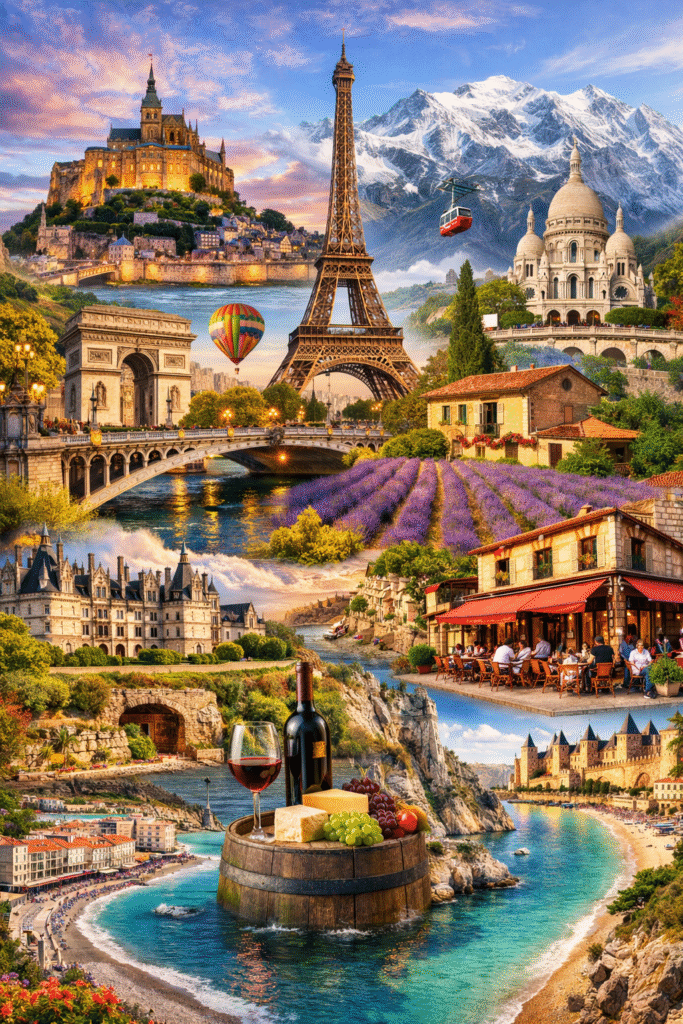
France is one of those rare destinations that feels both familiar and endlessly surprising. From elegant cities and romantic countryside villages to alpine peaks and sun-soaked Mediterranean beaches, France offers a deeply layered travel experience. Whether you are drawn by world-class art, iconic cuisine, historic towns, or scenic road trips, traveling through France feels like moving through living history. As one of Europe’s most visited countries, France continues to inspire travelers seeking culture, beauty, and slow, meaningful exploration.
This France travel guide is designed to help you plan a real, practical journey while understanding what truly makes the country special beyond postcards and clichés.
Overview of France
France is located in Western Europe, bordered by Spain, Italy, Switzerland, Germany, Belgium, Luxembourg, and the Atlantic Ocean and Mediterranean Sea. Its diverse geography is one of its strongest travel advantages, allowing visitors to experience beaches, mountains, vineyards, and medieval towns in a single trip.
France plays a central role in European culture, fashion, cuisine, and history. It has influenced art, philosophy, architecture, and global travel trends for centuries. The country is also extremely traveler-friendly, with excellent transport infrastructure and well-preserved heritage sites.
AI Travel Planner
The main gateway city to France is Paris, the capital and largest city. Most international travelers enter via Paris Charles de Gaulle Airport, making Paris a natural starting point for exploring the rest of the country.
Major Cities and Regions of France
Paris
The cultural and political heart of France, known for museums, architecture, fashion, and iconic landmarks.
Provence
A sunlit region famous for lavender fields, Roman ruins, charming villages, and Mediterranean lifestyle.
French Riviera (Côte d’Azur)
A glamorous coastal stretch with beach towns, luxury resorts, and artistic heritage.
Loire Valley
Known as the “Garden of France,” filled with Renaissance castles and vineyard landscapes.
Normandy
Historic coastal region famous for World War II sites, cliffs, and traditional countryside.
Alsace
A unique region influenced by both French and German culture, known for storybook towns and wine routes.
French Alps
Mountain region offering skiing, hiking, alpine lakes, and scenic drives.
Famous Tourist Places in France
Eiffel Tower
City: Paris
Distance from Paris: Central landmark
How to reach: Metro, bus, or walking within Paris
Why visit: The Eiffel Tower is the most iconic symbol of France. Visiting offers panoramic views of Paris and a powerful introduction to the country’s architectural elegance.
Louvre Museum
City: Paris
Distance from Paris: Central
How to reach: Metro or walking
Why visit: Home to thousands of artworks including the Mona Lisa, the Louvre is one of the world’s greatest museums and a must for culture lovers.
Palace of Versailles
City: Versailles
Distance from Paris: Around 20 km
How to reach: RER train from Paris
Why visit: A symbol of royal opulence, the palace showcases France’s monarchy, gardens, and artistic grandeur.
Mont Saint-Michel
Region: Normandy
Distance from Paris: Around 360 km
How to reach: Train to Rennes, then bus
Why visit: A medieval abbey rising from tidal flats, Mont Saint-Michel feels almost unreal and is one of France’s most magical sights.
French Riviera Beaches
Region: Côte d’Azur
Distance from Paris: Around 900 km
How to reach: Flight or train to Nice
Why visit: Clear waters, elegant promenades, and a relaxed Mediterranean vibe make this coastline ideal for leisure travel.
Châteaux of the Loire Valley
Region: Loire Valley
Distance from Paris: Around 280 km
How to reach: Train or road trip
Why visit: Dozens of castles surrounded by vineyards and rivers offer a fairytale-like travel experience.
Landscapes and Natural Attractions
France’s landscapes are remarkably diverse. The French Alps dominate the southeast with snow-capped peaks and glacial lakes. In contrast, the Mediterranean coast offers turquoise waters and sunny beaches. The Atlantic coastline features dramatic cliffs and wild beaches, especially in Brittany and Normandy.
The countryside is dotted with vineyards, rolling hills, sunflower fields, and lavender valleys. Rivers like the Loire, Rhône, and Seine shape both geography and culture. Seasonal changes are distinct, with colorful autumns, snowy winters in the mountains, blooming springs, and lively summers across the country.
Best Things to Do in France
Sightseeing
Explore historic city centers, castles, museums, and UNESCO-listed monuments.
Cultural Experiences
Attend local markets, wine tastings, art exhibitions, and regional festivals.
Nature Exploration
Walk coastal trails, hike mountain paths, and relax in countryside villages.
Slow Travel
Spend time in small towns, cafés, and scenic regions rather than rushing between major cities.
Culinary Exploration
Enjoy French cuisine region by region, from pastries and cheeses to seafood and wine.
Adventure and Unique Experiences
Trekking and Hiking
Best in the French Alps, Pyrenees, and Corsica during late spring to early autumn.
Skiing
Available in Alpine resorts from December to March, suitable for beginners to advanced skiers.
Paragliding
Popular in Annecy and Alpine regions, best during summer months.
Cycling Tours
Wine regions and countryside routes are ideal for cycling enthusiasts.
River Cruising
Gentle cruises along the Seine, Loire, and Rhône offer scenic travel without physical intensity.
Culture, History, and Heritage
France’s culture is deeply rooted in art, philosophy, and everyday rituals. From café conversations to national celebrations, life here values balance, beauty, and tradition.
Historically, France has played a major role in shaping Europe, from Roman times and medieval kingdoms to revolutions and modern democracy. The country has over 40 UNESCO World Heritage Sites, including cathedrals, old towns, landscapes, and cultural routes.
French architecture ranges from Gothic cathedrals and Renaissance châteaux to modern design. Art, literature, fashion, and cinema remain central to national identity.
Local Insights for Travelers
French meals follow fixed times, and restaurants may close between lunch and dinner. Planning meal times avoids frustration.
Greeting people with a polite “bonjour” before asking questions goes a long way in social interactions.
Local bakeries and markets often provide better food experiences than tourist-focused restaurants.
Public transport is reliable, but smaller towns are best explored by car.
Sunday closures are common in smaller towns, so plan shopping accordingly.
Tipping is not mandatory, as service charges are included, but rounding up is appreciated.
Practical Travel Information
Best Time to Visit
April to June and September to October offer pleasant weather and fewer crowds. Summer is lively but busy, while winter suits ski trips.
Ideal Trip Duration
10 to 14 days allows a balanced mix of cities and countryside.
Budget Range
Budget: Hostel stays, public transport, bakeries, and museums
Mid-range: Boutique hotels, regional trains, and local dining
Luxury: Historic hotels, fine dining, private tours
Safety
France is generally safe for travelers. Standard precautions apply in crowded tourist areas.
Connectivity and Transport
France has one of Europe’s best rail networks. High-speed trains connect major cities efficiently.
Sample 5-Day France Itinerary
Day 1: Arrive in Paris
Explore the Eiffel Tower area, Seine walk, and local cafés.
Day 2: Paris Culture
Visit the Louvre, Notre-Dame surroundings, and Montmartre.
Day 3: Versailles Day Trip
Half-day at the palace and gardens, evening back in Paris.
Day 4: Loire Valley
Travel to Loire Valley, explore one or two castles.
Day 5: French Riviera or Provence
Fly or take a train south for coastal views or countryside villages.
FAQs About Traveling to France
Is France safe for tourists?
Yes, France is generally safe with normal travel precautions.
What is the best month to visit France?
May, June, September, and October are ideal for most travelers.
Is France good for solo travelers?
Yes, especially cities and well-connected regions.
Is France budget-friendly?
It can be, especially outside Paris and during shoulder seasons.
Do I need to know French?
Basic phrases help, but English is widely understood in tourist areas.
Can I travel France without a car?
Yes, major cities and regions are well-connected by trains.
Conclusion
France is not just a destination; it is a layered experience that rewards travelers who slow down and look closely. Whether you are walking through historic streets, tasting regional food, or watching landscapes unfold from a train window, France invites you to travel with curiosity and appreciation. With thoughtful planning and an open mindset, a journey through France can become one of the most enriching travel experiences of your life.